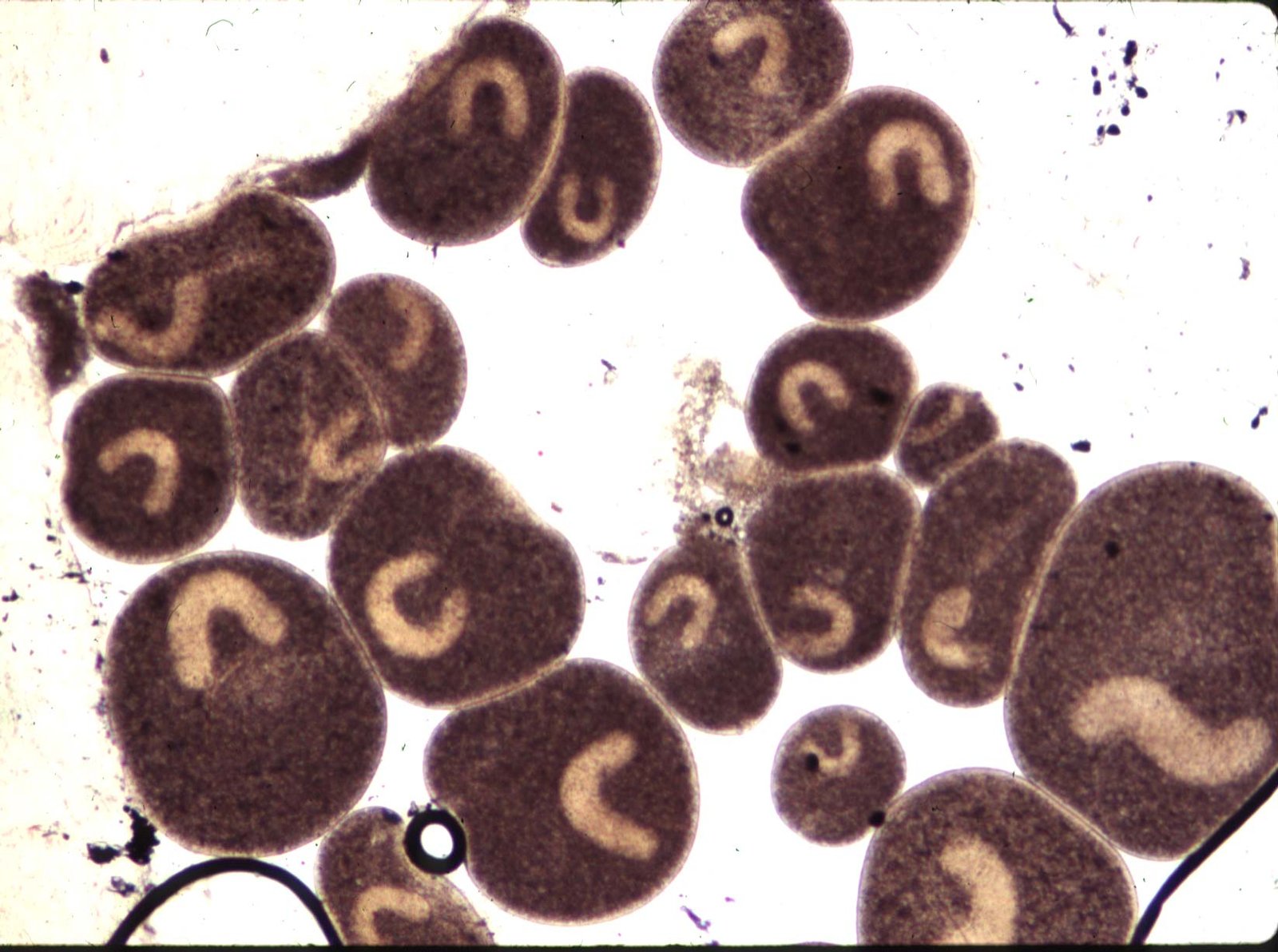
Anchor Worm (Lernaea) Infestation
Anchor worm, caused by parasitic copepods of the genus Lernaea, is a significant ectoparasite of freshwater farmed and ornamental fish, with the mature female embedding her anterior end deep into the host's skin or muscle using a distinctive anchor-shaped holdfast structure, leaving the rest of her elongated body trailing externally, a visible, often dramatic infestation sign that makes anchor worm one of the more readily visually diagnosable external parasite problems farmers encounter without needing microscopic examination to confirm. The attachment site creates an open wound vulnerable to secondary bacterial and fungal infection, meaning anchor worm's practical harm often extends well beyond the direct tissue damage the parasite itself causes, with secondary infection at the attachment wound frequently being the more immediately dangerous complication, particularly in heavily infested fish carrying numerous attachment sites across the body. The parasite's life cycle includes free-swimming larval stages before the mature female's final attachment, meaning effective control generally targets these vulnerable free-swimming stages with an appropriately timed bath treatment, since the deeply embedded adult female is considerably harder to eliminate with external treatment once firmly anchored, making treatment timing relative to the parasite's life cycle stage a significant determinant of treatment success rather than simply applying any approved treatment at any arbitrary point. Pond and tank sanitation, removing or reducing organic debris and maintaining good water quality, supports anchor worm control by reducing the environmental conditions that favor larval survival and transmission between infected and uninfected fish sharing the same water, making environmental management a meaningful complement to direct chemical treatment rather than treatment alone being the sole effective control approach for a well-managed anchor worm problem.