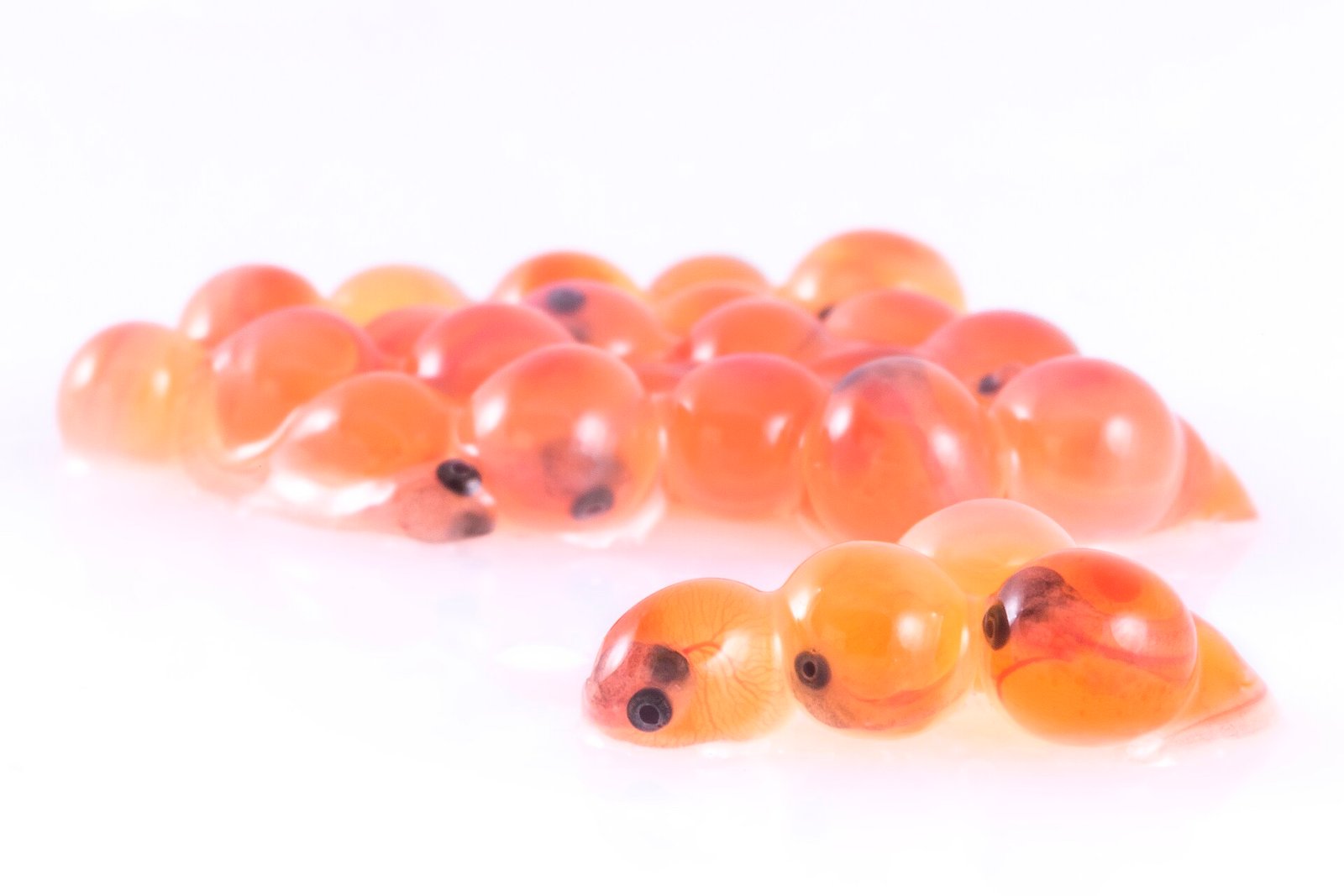
Infectious Pancreatic Necrosis (IPN)
Infectious pancreatic necrosis is a viral disease of salmonid fish caused by the IPN virus, a birnavirus that primarily destroys the pancreas and, secondarily, the kidney and gut lining. In fry and first-feeding larvae it is expressed as sudden high mortality with whirling, spiral swimming, darkened coloration, abdominal distension, and a white fecal cast trailing from the vent; internally the pancreas appears necrotic and the intestine whitish. Survivors become lifelong carriers that shed virus in feces, milt, and ovarian fluid, seeding hatcheries and horizontal transmission through water. For hatchery operators IPN is one of the most damaging early-life diseases, because losses of 50 to 90 percent can occur in the first weeks of feeding, and surviving smolts may carry the virus to sea. Control rests on biosecurity, surface-disinfection of fertilized eggs, use of virus-free water (ozonation or UV), and culling or separation of positive broodstock families. Vaccination of smolts reduces seawater losses, and breeding for IPN resistance has produced markedly resistant strains in Norwegian Atlantic salmon. There is no treatment; prevention at egg and first-feeding stage is decisive.