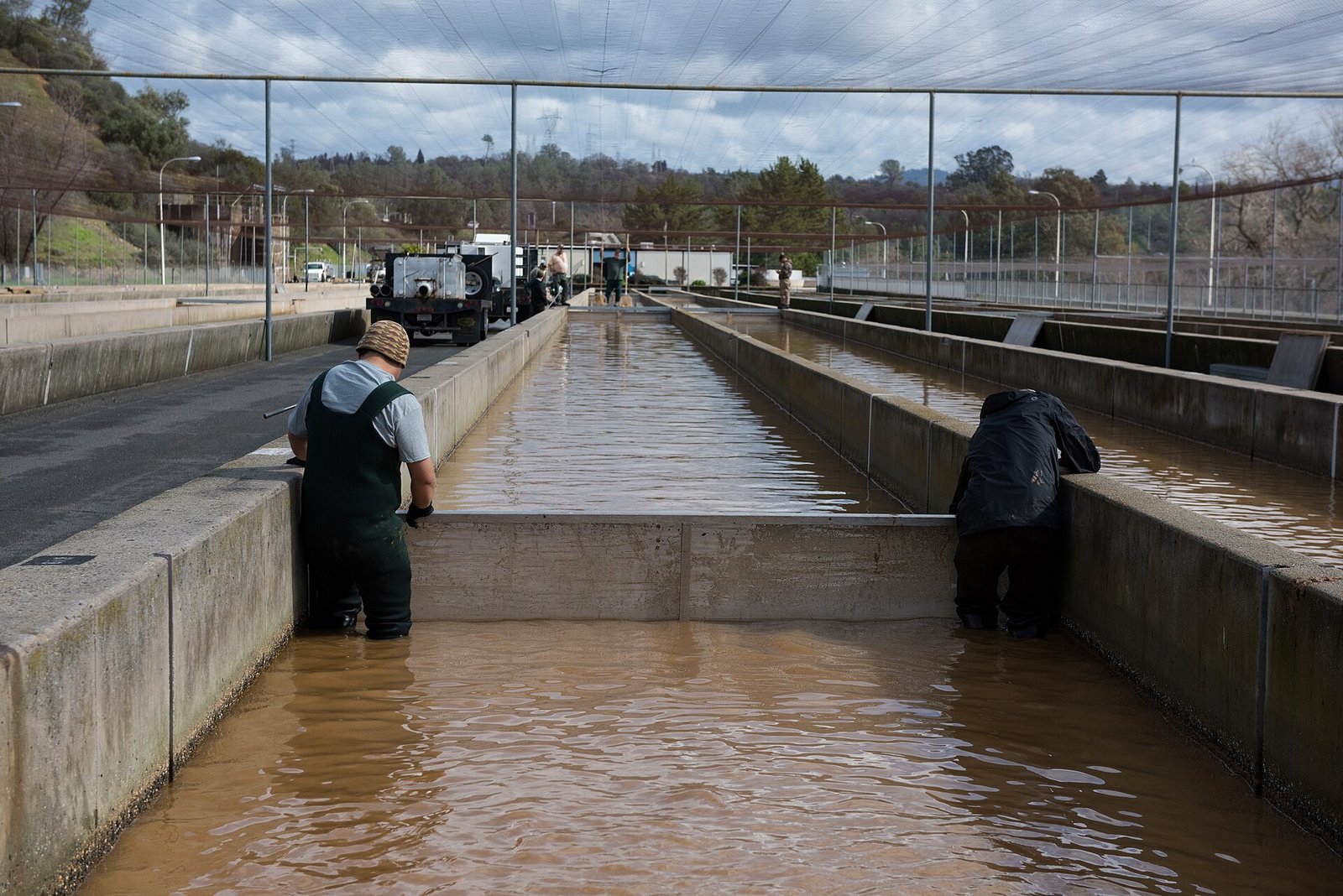
Machine Learning for Disease Detection
Machine learning for disease detection applies trained models to aquaculture data, camera images, behavior tracks, water quality histories, and sound, to identify sick fish or impending outbreaks earlier than human observation. Computer vision systems score external signs such as skin lesions, fin erosion, eye opacity, and abnormal swimming from underwater cameras, while behavioral models flag reduced appetite, lethargy, or grouping anomalies as early prodromes of bacterial, viral, or parasitic disease. The practical advantage is lead time: behavior-based models often detect problems 2-7 days before visible mortality, opening a window for targeted treatment, reduced feeding, or isolation that sharply lowers losses and antibiotic use. Performance depends on data quality and labeling: models trained on one farm's cameras degrade under different turbidity, lighting, or species, so transfer requires local retraining or fine-tuning, and veterinary-confirmed labels are the scarce input that separates a demo from a working system. Farms should treat model output as a triage signal, a ranked queue of pens for human inspection, not an autonomous diagnosis. The highest-value integrations couple detection to farm management software, automatically triggering sampling, treatment workflows, and feed holds, and building an epidemiological record that improves both the model and biosecurity decisions over successive cycles.