




















How to Recognise and Treat Swim Bladder Problems in Grow-Out Fish
A fish struggling to maintain normal position in the water column is showing one of the more visually obvious but causally ambiguous problems in grow-out — narrowing down the actual cause before attempting a fix.
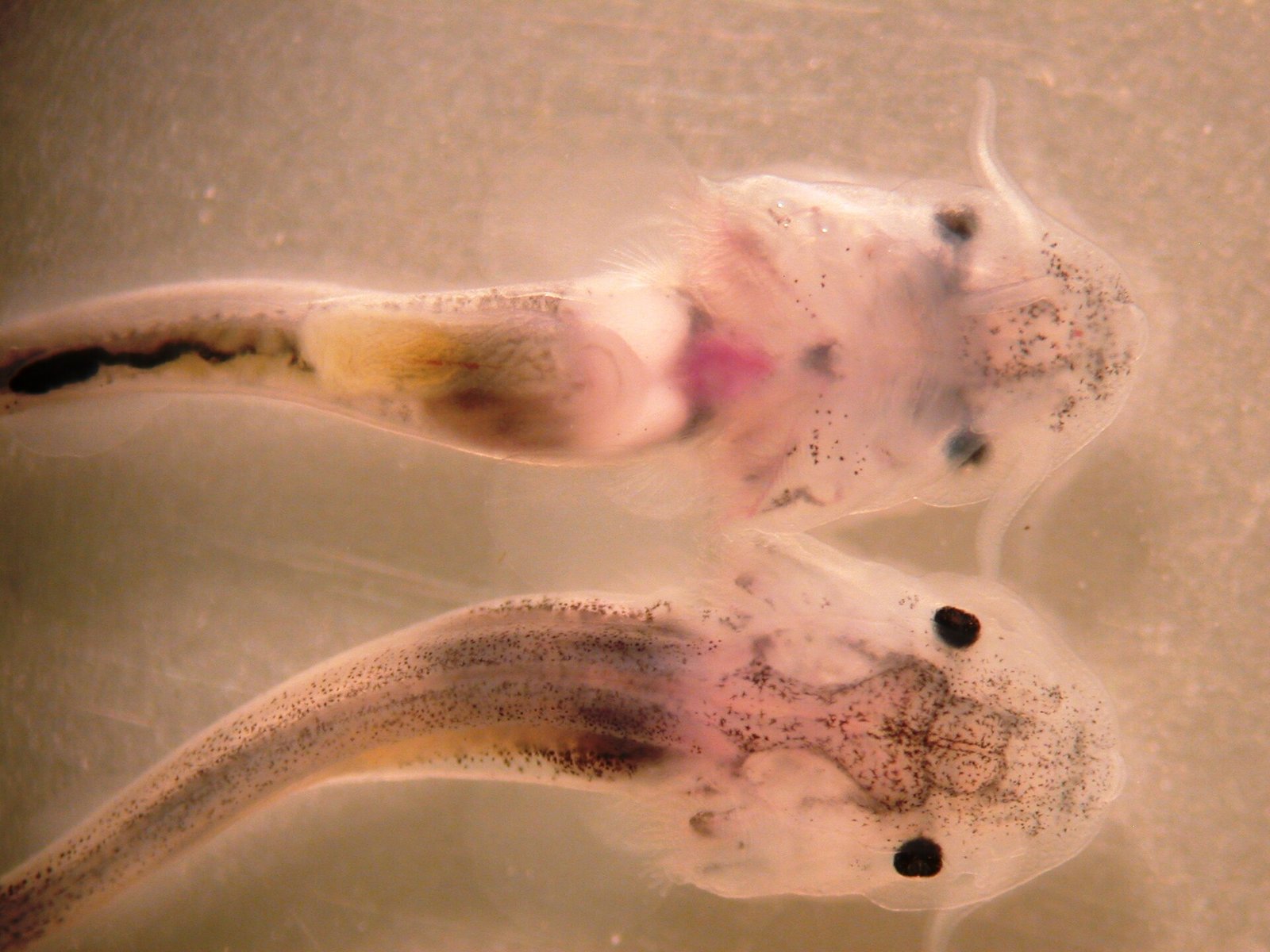
A fish that cannot maintain normal position in the water column — floating uncontrollably, sinking, or swimming at an abnormal angle — is showing a visually unmistakable symptom with a frustratingly wide range of possible underlying causes, from a simple developmental issue in early life stages to gas supersaturation, infection, or physical injury in grow-out fish. Treatment, where treatment is even possible, depends entirely on correctly identifying which.
Recognizing swim bladder problems
- Loss of normal buoyancy control — persistent floating at the surface, inability to stay submerged, or sinking to the bottom despite otherwise apparently normal condition.
- Abnormal swimming angle — tilting, swimming at a consistent non-horizontal angle, or difficulty maintaining stable position even when not actively swimming.
- Distended or visibly abnormal body shape in more severe cases, sometimes with visible asymmetry if the swim bladder itself has become distended or displaced.
Common causes in grow-out fish
Gas supersaturation
Water supersaturated with dissolved gas (often from a mechanical issue — a leaking pump seal drawing in air, or a supersaturated well-water source) can cause gas bubble disease, affecting the swim bladder among other tissues. This is an environmental cause, not an infectious one, and the fix is identifying and correcting the water source or mechanical issue causing supersaturation — see the water quality panel guide for the broader diagnostic context this sits within.
Bacterial or other infection
Infection affecting the swim bladder directly, sometimes secondary to a broader systemic bacterial infection, can impair its normal function — this typically presents alongside other signs of bacterial illness rather than as an isolated buoyancy problem, and should be investigated through the standard diagnostic protocol rather than assumed in isolation.
Physical injury or overfeeding-related distension
Handling injury, aggressive feeding behavior causing air ingestion in some species, or simple overfeeding can produce temporary buoyancy issues that may resolve without specific treatment once the underlying cause (reduced ration, gentler handling) is corrected.
Developmental issues (primarily in early life stages)
Swim bladder inflation failure during the larval stage is a distinct, earlier-life-stage issue covered separately in hatchery-focused guidance — grow-out fish presenting with buoyancy problems are more likely facing one of the environmental, infectious or physical causes above rather than an uncorrected developmental issue from early life, though a fish that never achieved normal swim bladder function at the larval stage can carry a lifelong mild impairment that becomes more noticeable as the fish grows.
Diagnostic approach
- Check for a pattern across the population — isolated individual cases point toward injury or individual developmental variation, while a cluster of cases appearing together points toward an environmental cause (gas supersaturation) or an infectious one.
- Review recent water-source and mechanical system changes — a new or recently serviced pump, well, or aeration system is a common and checkable gas-supersaturation trigger worth investigating directly.
- Examine affected individuals for other signs of illness — concurrent lesions, lethargy or feeding changes point toward infection as a contributing or primary cause rather than a purely mechanical buoyancy issue.
- Assess severity and trajectory — a stable, mild case affecting a small number of individuals may not warrant aggressive intervention, while a worsening or spreading pattern needs prompt investigation of the underlying cause.
Treatment and management options
Treatment is genuinely limited for a true swim bladder disorder — there is no direct fix for the organ itself in most cases, which is why identifying and correcting the underlying cause (supersaturation source, infection, overfeeding) matters more than any swim-bladder-specific intervention. For individual fish with a persistent but stable mild impairment and no other health concerns, some operations simply monitor and allow the fish to continue in production if it is otherwise feeding and growing adequately, while more severely affected individuals that cannot feed or move normally may be the more humane candidates for culling rather than prolonged compromised welfare.
Worked example
A RAS trout operation notices a cluster of fish showing abnormal buoyancy over the same week, affecting roughly a dozen individuals across one tank. Investigation finds the tank's makeup water had recently switched to a well source that had not been in regular use, and a total dissolved gas check confirms that source is running supersaturated. The farm switches back to the previous water source while arranging degassing treatment for the well water before it can be reintroduced, and no new cases appear once the source is corrected — affected individuals that were only mildly impacted recover over the following weeks, while the handful most severely affected are culled on welfare grounds. The case illustrates why the cluster pattern and the recent-change review pointed directly at an environmental cause rather than requiring an extensive infectious-disease workup.
Common mistakes
- Treating buoyancy problems as a standalone condition without investigating for gas supersaturation or underlying infection as the actual cause.
- Assuming all swim bladder issues trace back to larval-stage developmental failure, missing an environmental or infectious cause specific to the current grow-out conditions.
- Continuing to feed or handle affected fish normally without adjusting for their compromised ability to maintain position and potentially feed effectively.
- Not investigating recent mechanical or water-source changes when a cluster of cases appears together.
Frequently asked questions
How can I tell if gas supersaturation is the cause without specialized testing?
A total dissolved gas pressure meter gives a direct reading, but in its absence, a sudden cluster of buoyancy cases coinciding with a recent change to the water source, pump system or aeration setup is a strong circumstantial indicator worth investigating even without specialized equipment on hand.
Is swim bladder disorder contagious between fish?
Not directly in the way an infectious pathogen spreads — if the underlying cause is environmental (gas supersaturation) or a shared water-quality issue, multiple fish can be affected simultaneously without any fish-to-fish transmission occurring; where infection is the underlying cause, it is the infection itself that may be transmissible, not the buoyancy symptom.
Can fish with mild swim bladder impairment still be harvested and sold normally?
Generally yes, provided the fish is otherwise healthy and the condition does not represent a food-safety or quality concern specific to the affected tissue — this is a production and welfare consideration more than a food-safety one in most mild cases, though severely affected individuals may not reach market condition or may be culled before that point regardless.
Does species affect susceptibility to swim bladder problems?
Yes — physostomous species (with a duct connecting the swim bladder to the gut, allowing some gas regulation via gulping air) and physoclistous species (without this duct, regulating gas via blood gas exchange) have different swim bladder physiology and correspondingly different susceptibility patterns to various causes of dysfunction.
Should a fish showing swim bladder symptoms be isolated from the rest of the population?
If infection is suspected as the cause, isolation follows the same logic as any other suspected infectious presentation; if the cause is confirmed environmental (gas supersaturation affecting the whole system), isolating the individual fish does not address the actual problem, which requires correcting the shared environmental cause instead.