
















Sea Bass and Sea Bream Cage Farming: The Full Production Cycle
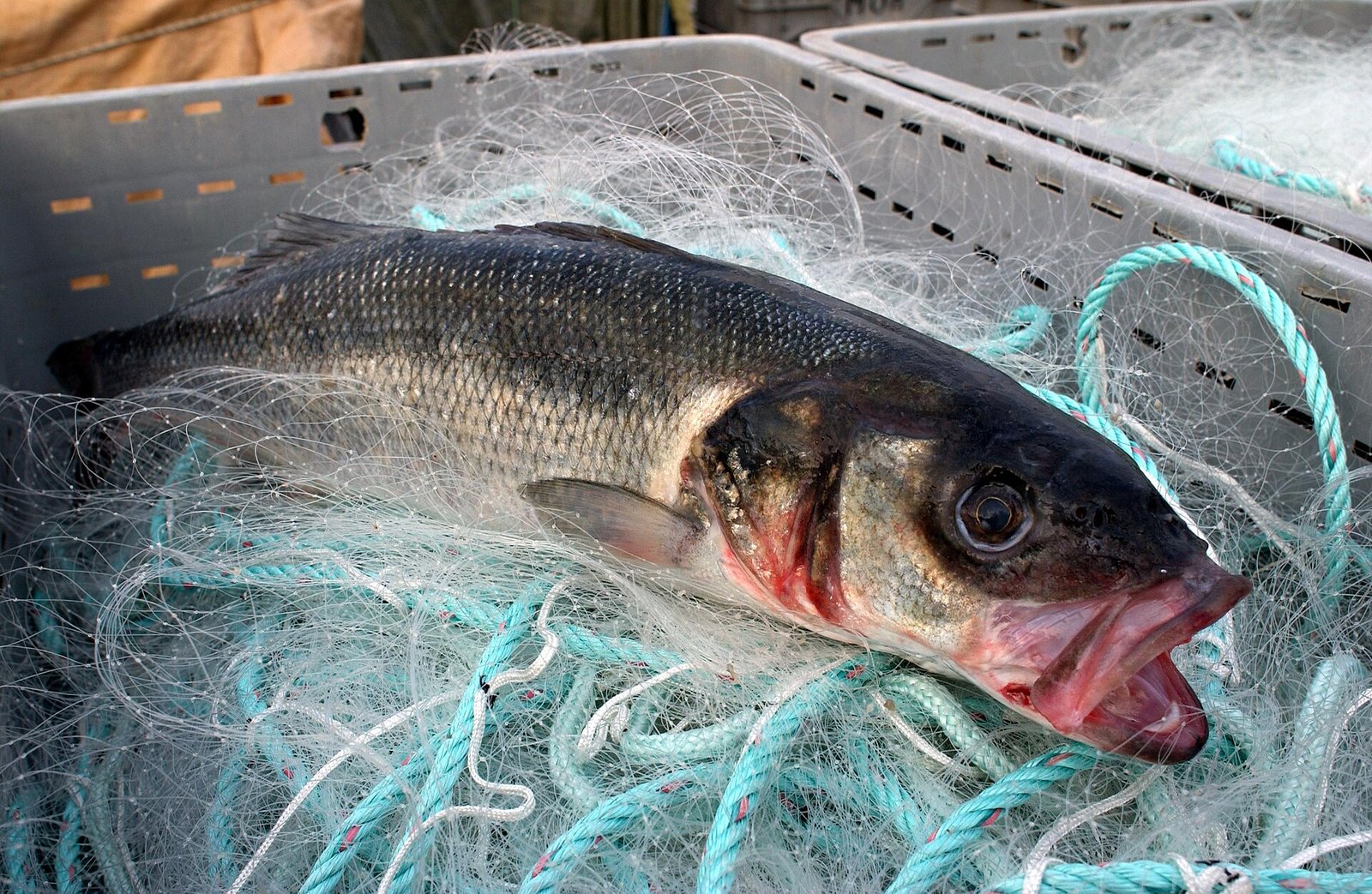
Drive along almost any sheltered bay in the Aegean and you will see them: rows of circular HDPE cages, each holding tens of thousands of fish. European sea bass (Dicentrarchus labrax) and gilthead sea bream (Sparus aurata) are the two species that turned Mediterranean aquaculture from a lagoon tradition into an export industry, with Türkiye and Greece as the largest producers.
The two species are often farmed side by side, sold through the same channels and discussed in the same breath. Biologically, they are quite different. This guide follows a cohort through the full cycle and points out where those differences matter for the farm manager.
The two species at a glance
| European sea bass | Gilthead sea bream | |
|---|---|---|
| Scientific name | Dicentrarchus labrax | Sparus aurata |
| Family | Moronidae | Sparidae |
| Sex system | Gonochoristic; sex influenced by early rearing temperature | Protandrous hermaphrodite (male first, many later become female) |
| Natural spawning season | Winter (roughly December–March in the Mediterranean) | Winter (roughly December–April) |
| Preferred grow-out temperature | Around 22–25 °C | Around 22–26 °C |
| Cold tolerance | Relatively good; eurythermal | Poor; growth slows sharply below about 15 °C |
| Salinity tolerance | Very wide (euryhaline) | Wide, but less than sea bass |
| Typical market sizes | 300–600 g portions, larger fillet fish | 300–500 g portions |
Those few rows explain much of the practical difference between farming the two.
Stage 1: Broodstock and spawning
Both species spawn naturally in winter, which used to mean one batch of juveniles per year. Modern hatcheries break that seasonality by holding broodstock groups under shifted photoperiod and temperature regimes. By advancing or delaying the light and temperature cycle for different groups, a hatchery can produce eggs over most of the year and supply juveniles to farms in several batches.
The sex biology shapes broodstock management:
- Sea bream change sex. A young broodstock group is mostly male; as fish age, a proportion become female. Hatcheries maintain mixed age groups to keep a workable sex ratio.
- Sea bass sex is partly determined by temperature during early larval development. Higher temperatures in the early weeks tend to push populations towards males, and farmed sea bass populations are typically male-biased. Males usually grow more slowly than females and mature earlier, which is one reason hatcheries pay close attention to early rearing temperature.
Eggs are pelagic and are collected from the outflow of the spawning tanks, counted volumetrically and moved to incubators.
Stage 2: Larval rearing
Larval rearing is the most technical part of the cycle. A simplified sequence, which differs between hatcheries, looks like this:
- Yolk-sac phase. For the first few days the larvae live on their yolk reserves. The mouth opens and the larvae must start feeding before the reserve runs out.
- Rotifers. First feeding uses rotifers (Brachionus spp.), enriched with lipids rich in DHA and EPA because the larvae cannot synthesise enough of these fatty acids themselves.
- Artemia. As the mouth grows, larvae are moved onto Artemia nauplii and then enriched metanauplii.
- Weaning. Live feed is gradually replaced by microdiets. Weaning success has a major effect on survival and on later deformity rates.
"Green water" or "pseudo-green water" techniques, adding microalgae or clay to the rearing tanks, are widely used to improve feeding conditions and larval behaviour.
The main quality issues at this stage are skeletal deformities (lordosis, jaw malformations, operculum defects) and swim bladder non-inflation. Fish without an inflated swim bladder grow poorly and are prone to deformity. Hatcheries remove them by density grading: non-inflated larvae sink in a salinity or anaesthetic bath and are discarded.
Typical end point: weaned fry of roughly 0.5–2 g, a few months after hatching, depending on temperature and protocol. You can see how a hatchery tracks batches, feeding and survival through these steps in the hatchery demo.
Stage 3: Pre-ongrowing (nursery)
Fry are grown on in land-based tanks or nursery cages until they are big enough for open sea cages. Many farms stock sea cages with juveniles of around 2–10 g; some move larger fish to reduce exposure of small fish to open-water conditions.
This is also the stage where vaccination is usually carried out. Commercial vaccines against vibriosis (Vibrio anguillarum) and photobacteriosis (Photobacterium damselae subsp. piscicida) are routinely used, by immersion for small fish and by injection for larger ones. For sea bass, vaccines against viral nervous necrosis (betanodavirus) are also available. We cover the disease picture in more detail in our biosecurity article.
Stage 4: Grow-out in sea cages
Site and cage
Grow-out happens in floating cages, most often circular HDPE rings with nylon nets, moored in grid systems. Cage diameter commonly ranges from around 20 to over 50 m, and net depths of 10–20 m or more are typical in exposed sites. Site selection is driven by:
- Water exchange. Current speed controls oxygen supply and waste dispersion. Too little current means oxygen dips and sediment build-up; too much stresses fish and cages.
- Depth. Enough clearance below the net to keep waste dispersed and avoid contact with anoxic sediment.
- Exposure. Wave climate dictates the mooring and cage specification.
- Temperature regime. Warm summers drive growth; cold winters slow it, especially for sea bream.
Stocking density
Final densities in Mediterranean cages are commonly in the region of 15–25 kg/m³, depending on site conditions and welfare standards. Starting densities are much lower, and the gap between the two is managed by splitting and grading. Density interacts directly with oxygen demand and disease risk, so the right figure depends on your current and temperature profile. See our stocking density guide and use the stocking density calculator to check a unit before it hits its limit.
Feeding
Feed is the largest single operating cost in grow-out. Both species are fed extruded pellets, by hand, feed cannons or centralised pneumatic systems, with rations adjusted to fish size and temperature. In summer, sea bream and sea bass may be fed several times a day; in the coldest months intake falls sharply and many farms reduce to one meal or skip days.
Feed conversion depends heavily on temperature, ration control and fish health. We go into species-specific numbers in sea bass FCR and sea bream FCR.
Growth timeline
How long does it take to reach a 400 g portion? It depends far more on the temperature profile than on any single number in a textbook. As a rough orientation:
- Sea bream typically need around 14–20 months in the sea from juvenile to 350–450 g at Aegean and Eastern Mediterranean temperatures. A cohort that meets its first winter at a small size loses a lot of time.
- Sea bass generally take somewhat longer to reach the same weight, often around 16–24 months, partly because of the male-biased populations mentioned above.
The month in which juveniles are stocked matters a great deal. Fish stocked in spring get a full warm season before their first winter; fish stocked in autumn spend their first months barely growing. This is one reason hatcheries supply juveniles in several batches through the year.
For forecasting growth across seasons, the thermal growth coefficient is far more reliable than a fixed growth rate. We explain the method in our article on TGC vs SGR.
Monitoring
Daily and weekly routines in a well-run cage farm include:
- Oxygen and temperature at cage depth, especially in late summer when warm water holds less oxygen and fish demand is highest. See dissolved oxygen in aquaculture.
- Feeding response, observed directly or by underwater camera. A unit that suddenly feeds poorly is telling you something.
- Mortality collection and recording by cause where possible. Use the mortality calculator to keep cumulative and period mortality comparable between units.
- Net condition, including fouling, which reduces water exchange, and holes, which lead to escapes.
- Sampling of weight and condition every few weeks.
Stage 5: Harvest
Harvest is planned around market size, price windows and, increasingly, contract specifications for weight class, fat content and appearance. Fish are fasted before harvest to empty the gut, crowded gently within the cage, pumped or brailed out and killed. In the Mediterranean, the traditional method is immersion in ice slurry, although welfare-focused alternatives such as electrical stunning are being adopted.
Handling in the final hours determines shelf life and appearance in the market. We cover fasting, slaughter and post-harvest quality in a separate guide.
Where the two species diverge in practice
Winter. Sea bream are more vulnerable to cold. Prolonged low temperatures depress feeding and immunity and are associated with a group of winter disease problems. Sites with cold winters favour sea bass, or need careful timing of sea bream stocking.
Parasites. Sea bream are notably affected by the gill monogenean Sparicotyle chrysophrii and the intestinal myxozoan Enteromyxum leei. Sea bass have their own gill monogenean, Diplectanum aequans. Monitoring programmes need to be species-specific.
Behaviour. Sea bass can be more nervous and more easily stressed by handling and disturbance. Sea bream are calmer in cages but have strong, crushing jaws that can damage nets.
Market. Both sell mostly as whole fresh fish in the portion range, but larger sea bass have a growing fillet market. Larger fish need longer cycles and more careful planning.
Running the cycle as a business
A sea bass and sea bream farm is really a portfolio of cohorts at different stages: broodstock groups, larval batches, nursery tanks, and dozens of cages each with its own stocking date, origin, vaccination status, feeding history and mortality curve. Lot-level traceability is increasingly a customer requirement, and every harvest has to be linked back to its hatchery batch and feed lots.
Keeping that history in disconnected spreadsheets is where most farms start, and where most farms run into trouble as they grow. An integrated system that follows each cohort from hatchery to harvest, as in our integrated farm demo, is what makes the cycle manageable at scale.
Frequently asked questions
Which is easier to farm, sea bass or sea bream?
Neither is easy, but they are difficult in different ways. Sea bream grow faster in warm water and are calmer in cages but are more sensitive to cold. Sea bass tolerate a wider range of temperature and salinity but tend to grow more slowly to portion size and are more easily stressed by handling.
How long does it take to farm sea bream to 400 grams?
Typically around 14–20 months in sea cages from a juvenile of a few grams, depending mainly on water temperature and stocking month. Cold winters lengthen the cycle significantly.
Why are farmed sea bass mostly male?
Sex determination in sea bass is influenced by both genetics and temperature during early larval development. Rearing conditions in hatcheries have historically produced male-biased populations. This matters because males generally grow more slowly and mature earlier than females.
What is the typical stocking density for sea bream cages?
Final densities are commonly in the range of about 15–25 kg/m³, depending on site current, temperature and welfare standards. The right figure for your farm depends on oxygen supply at your site.
Do sea bass and sea bream need vaccination?
Vaccination against vibriosis and photobacteriosis is standard practice in Mediterranean farms. For sea bass, a vaccine against viral nervous necrosis is also available. Programmes should be designed with your veterinarian based on your site's disease history.
Key takeaways
- Sea bass and sea bream share the same farm infrastructure but differ in sex biology, cold tolerance and parasite profile.
- Photoperiod and temperature control of broodstock lets hatcheries supply juveniles through most of the year.
- Larval rearing quality, especially swim bladder inflation and deformity control, sets the ceiling for the whole cycle.
- Time to portion size depends more on the temperature profile and stocking month than on any fixed growth figure.
- At farm scale, the cycle is a portfolio of cohorts, and lot-level records from hatchery to harvest are now a commercial requirement.
Related reading
- Climate Change and Mediterranean Aquaculture: What Farms Should Prepare For
- Disease Prevention in Mediterranean Marine Fish Farms: A Biosecurity Playbook
- Sea Bream Grow-Out Handbook: Stocking, Feeding and Harvest Specifications
- Sea Bass Grow-Out Handbook: Stocking, Feeding and Harvest Specifications
- TGC vs SGR: How to Forecast Fish Growth from Water Temperature
- Fish Vaccination Methods: Immersion, Injection and Oral