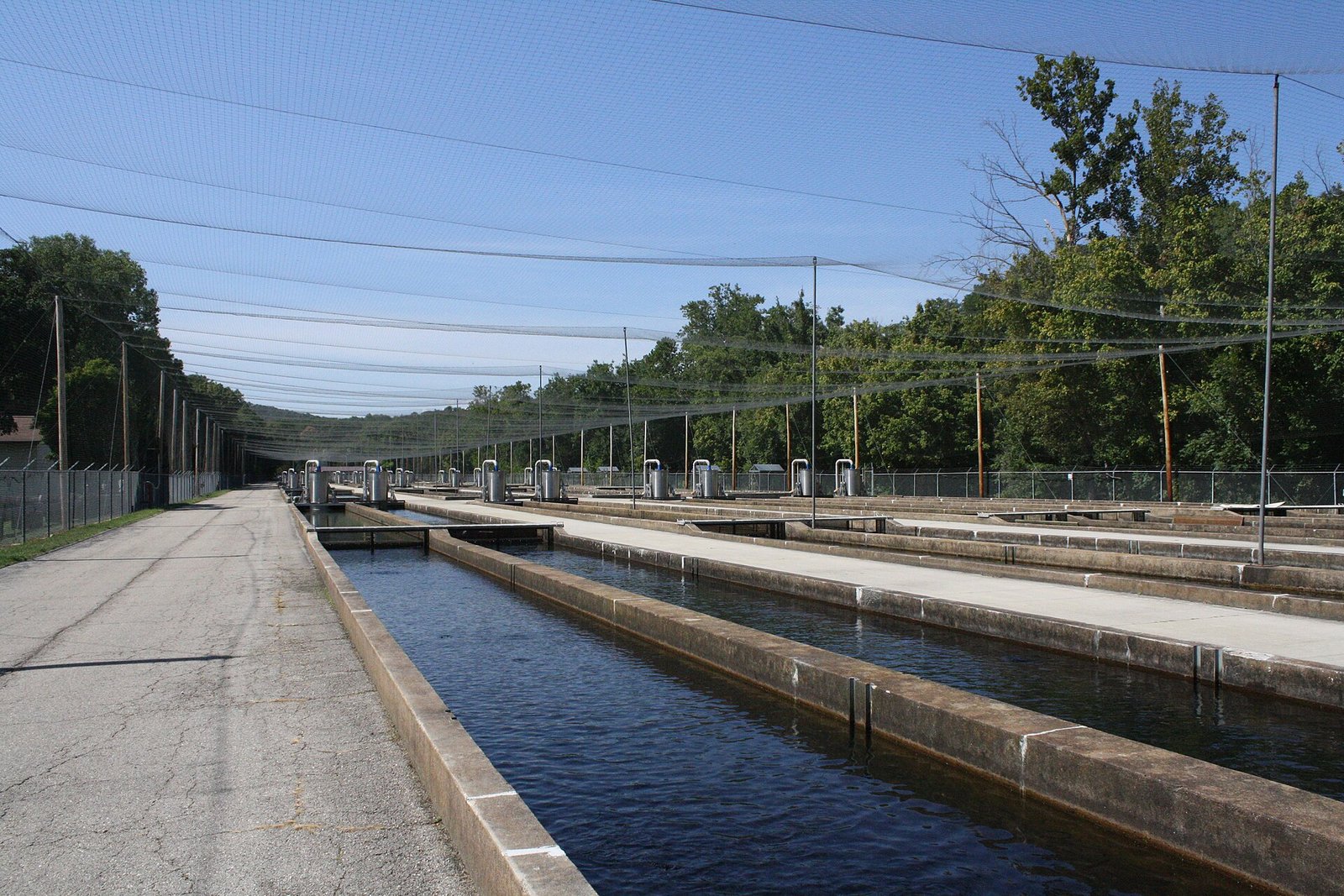
All-In-All-Out Stocking Strategy
All-in-all-out stocking fills a given tank, pond, or site with a single age cohort stocked at one time and harvests that entire cohort together before the system is cleaned, disinfected, and restocked, in contrast to continuous or staggered stocking where animals of different ages share a system or new stock is added while older stock remains. The biosecurity advantage is structural rather than procedural: a pathogen introduced into an all-in-all-out system has a finite population to infect and a hard reset, full drain and disinfection, at the end of every cycle, while continuous stocking gives an introduced pathogen a permanent reservoir of susceptible young animals to maintain itself in in a way that never fully clears even with good hygiene practice within the cycle. The trade-off is operational and economic: all-in-all-out requires enough tank or pond capacity to synchronize cohorts and accept downtime between cycles for cleaning and disinfection, while continuous stocking maximizes facility utilization and smooths cash flow by enabling staggered, continuous harvest rather than concentrated harvest events. Hatcheries and high-health-status nucleus breeding facilities almost universally use all-in-all-out specifically because the biosecurity benefit outweighs the utilization cost at that stage, while many grow-out and backyard-scale operations accept the higher disease-reservoir risk of continuous stocking for the operational flexibility it provides.