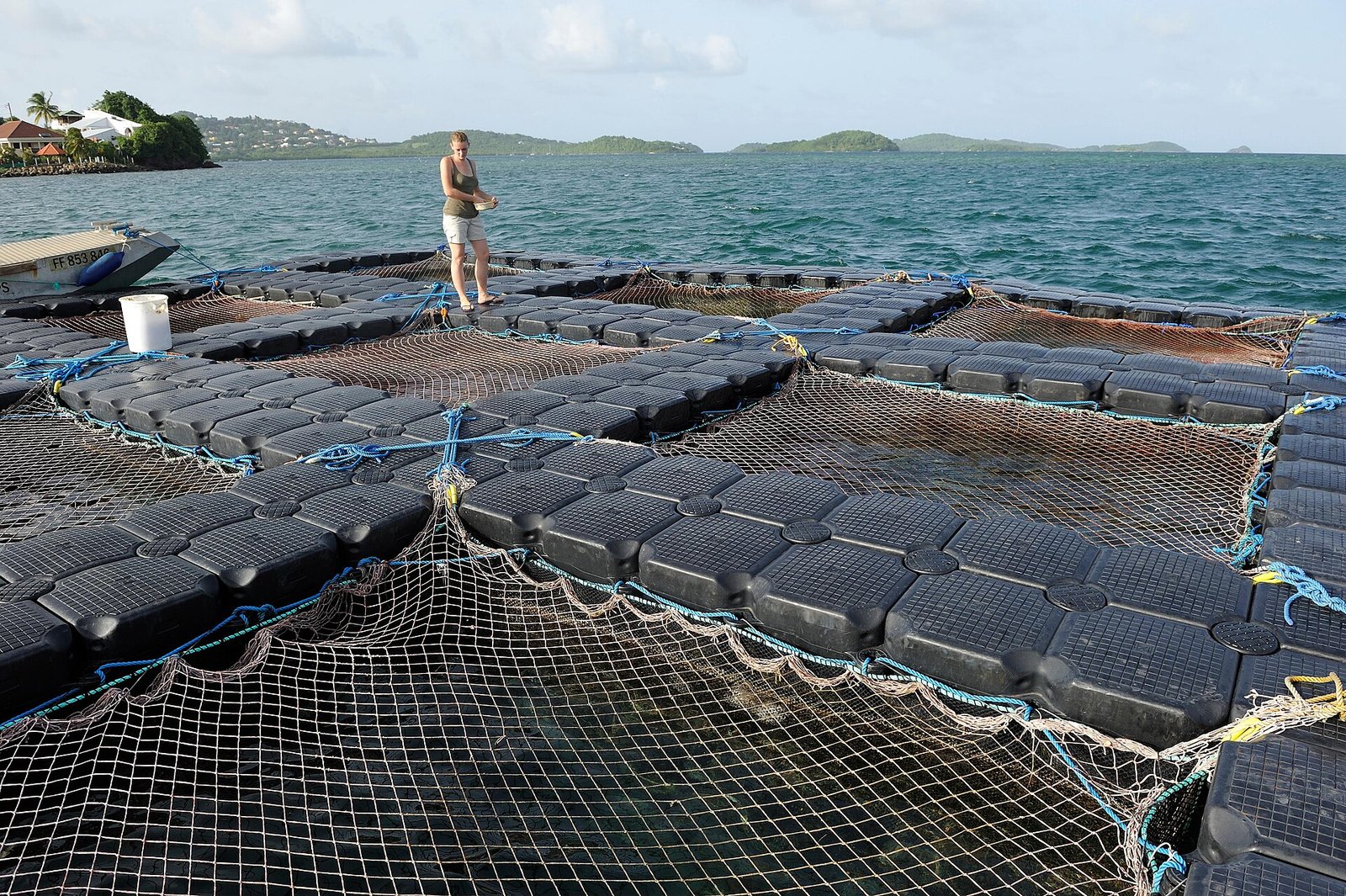
Copper-Based Antifouling Nets
Copper-based antifouling nets are cage netting woven wholly or partly from copper alloy wire, or polymer nets copper-coated, whose continuous release of copper ions suppresses settlement of algae, barnacles, hydroids, and mussels on the net surface. The practical gain is large: copper nets can stay clean for years in conditions where standard nylon needs high-pressure cleaning every few weeks, cutting cleaning vessel time, fuel, and the labour that typically represents a significant share of farm operating cost, while maintaining near-design water exchange through the mesh. Clean nets also reduce drag loads on moorings and eliminate much of the biofouling slurry that in-water cleaning would otherwise deposit on the seabed. The trade-offs are copper exposure and cost: ion release is highest in the first months, regulators in some jurisdictions set receiving-water copper limits near farms, and copper nets cost several times standard netting upfront, though service life of 5 to 10 years against 2 to 4 for nylon can close the gap. Related concepts include biofouling, net cleaning, effluent treatment, and carrying capacity, since reduced cleaning pressure is part of a site's overall environmental footprint.