




















Biofouling
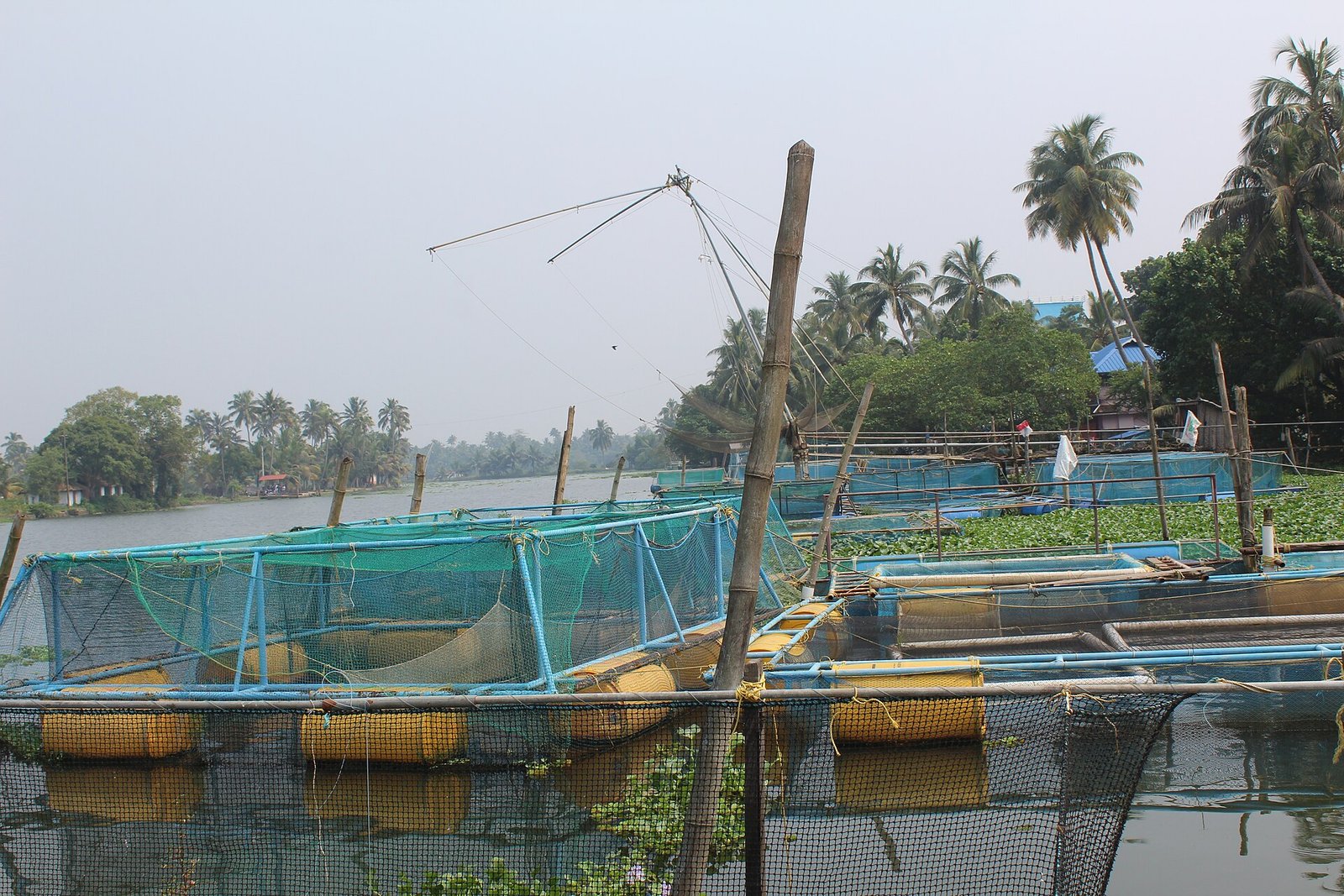
Biofouling is the unwanted accumulation of microorganisms, algae, barnacles, mussels, and other sessile organisms on submerged farm structures, including net pens, cage netting, mooring lines, intake pipes, and sensors. The fouling community develops within days as a bacterial slime film and progresses to macrofouling within weeks in warm productive waters, progressively clogging mesh openings, adding weight and drag to cages, and restricting water flow through nets and pipes. Consequences are operational and biological: reduced water exchange inside net pens lowers dissolved oxygen at depth, heavier fouled nets stress moorings in storms, and clogged intake screens starve pumps. Control methods include in-water net changing and cleaning with high-pressure washers, antifouling net coatings and copper-alloy nets, and for pipelines, periodic chlorination or pigging. Cleaning frequency is a trade-off between labour and dive-safety cost and fish welfare, and cleaning events must be scheduled to avoid stressing fish during sensitive periods such as sea lice treatments or high temperature. Biofouling also transfers invasive species between sites, so some jurisdictions regulate fouling management on vessels and cage equipment moved between farming areas.
Related terms
- Lobster Ranching and Fattening
- Oyster Grow-out Systems (Rack, Raft, Longline)
- Mussel Farming (Rope Culture)
- Scallop Farming (Ear Hanging and Lantern Nets)
- Marine Biofouling on Shellfish Gear
- HDPE Cage Design and Mooring
- Net Cleaning (High-Pressure and ROV)
- Mooring Analysis and Wave Loads
- Copper-Based Antifouling Nets
- Sensor Fouling and Biofilm Interference
- Cage Culture (Net Pen)
- Dissolved Oxygen (DO)
Referenced in articles
- Copper-Free Antifouling Options for Nets
- Predator Control at Fish Farms: Birds, Seals and Dolphins
- Water Turnover and Current Speed at Cage Sites
- Net Pen Biofouling Forecasting: Scheduling Cleaning by Season and Site
- Biofouling on Nets: Effects on Water Exchange
- Temperature Stratification in Sea Cages and What It Means for Feeding
- Pacific Oyster Farming: Bags, Trestles and Triploids
- Mussel Farming on Longlines: Seed, Growth and Harvest
- Calibrating Dissolved Oxygen and pH Probes
- Larval Rearing Tank Design for Marine Fish