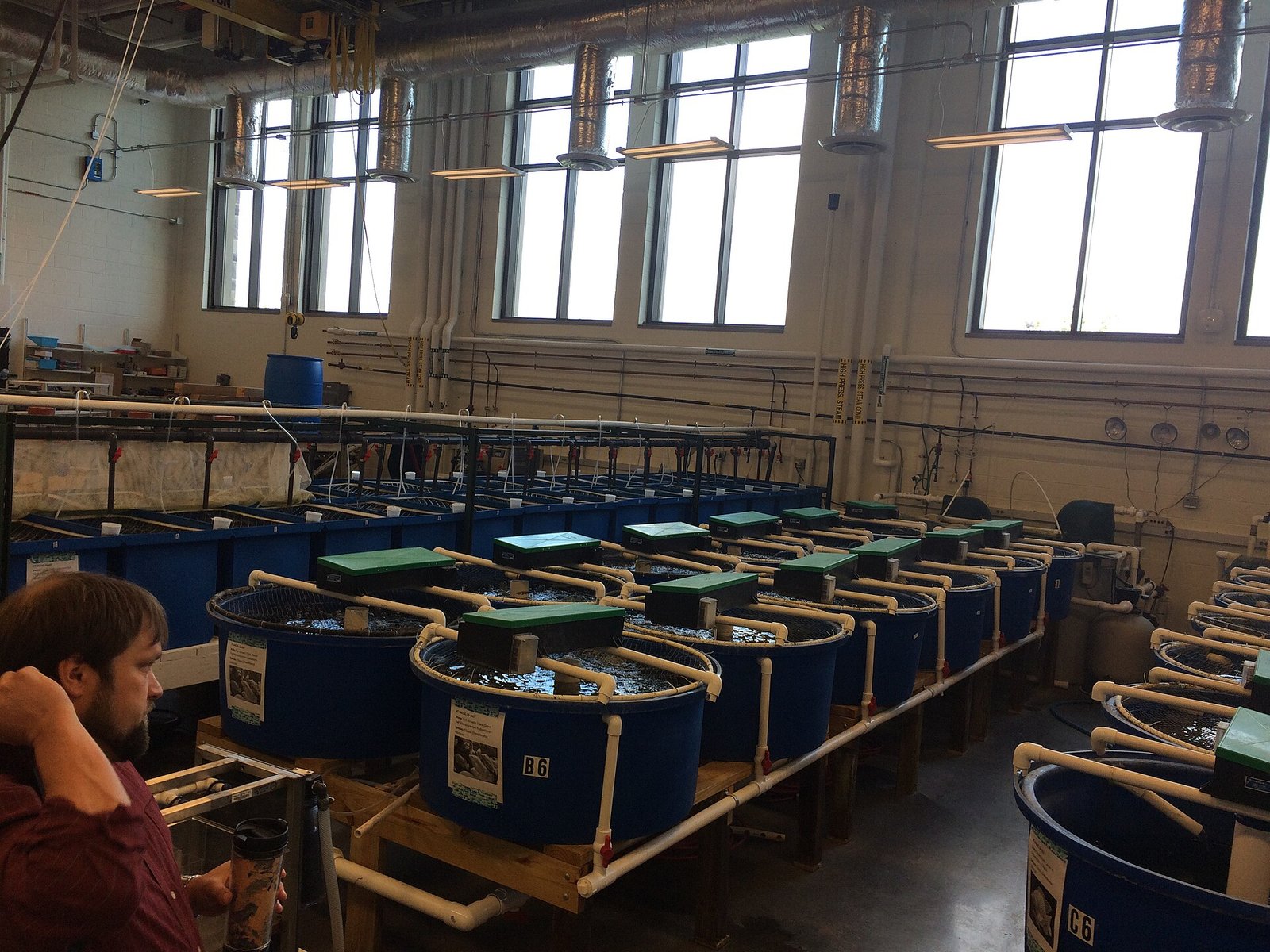
RAS Start-up (Maturation)
RAS start-up, or maturation, is the weeks-long period in which a newly built recirculation system is colonized by a functioning microbial community before it can safely carry a full fish load. The sequence follows known ecology: heterotrophic bacteria establish within days, ammonia-oxidizing bacteria (Nitrosomonas-type) appear in 1–3 weeks, and nitrite-oxidizing bacteria (Nitrospira-type) lag a further 1–3 weeks, creating the dangerous nitrite peak phase where partial water exchange and chloride dosing may be needed. Typical maturation runs 4–8 weeks at 20–25°C and longer below 15°C. Acceleration methods include seeding with biofilter media or sludge from a mature system, dosing ammonium chloride or cheap feed as an ammonia source (fishless cycling at 1–3 mg/L NH4-N), and keeping pH 7–8 and alkalinity above 100 mg/L CaCO3. Commissioning criteria are stable ammonia and nitrite below 0.2–0.5 mg/L at a known loading, verified by a ramped fish-stocking plan. Rushing maturation is the most common cause of first-year RAS failures; monitoring kits or online sensors during cycling pay for themselves many times over.