




















Integrated Multi-Trophic Aquaculture (IMTA) Setup: Combining Fish, Shellfish and Seaweed
IMTA works by turning one species' waste into another species' input — but the ecological elegance only pays off commercially if site conditions, spacing and species pairing are genuinely compatible, not assumed.
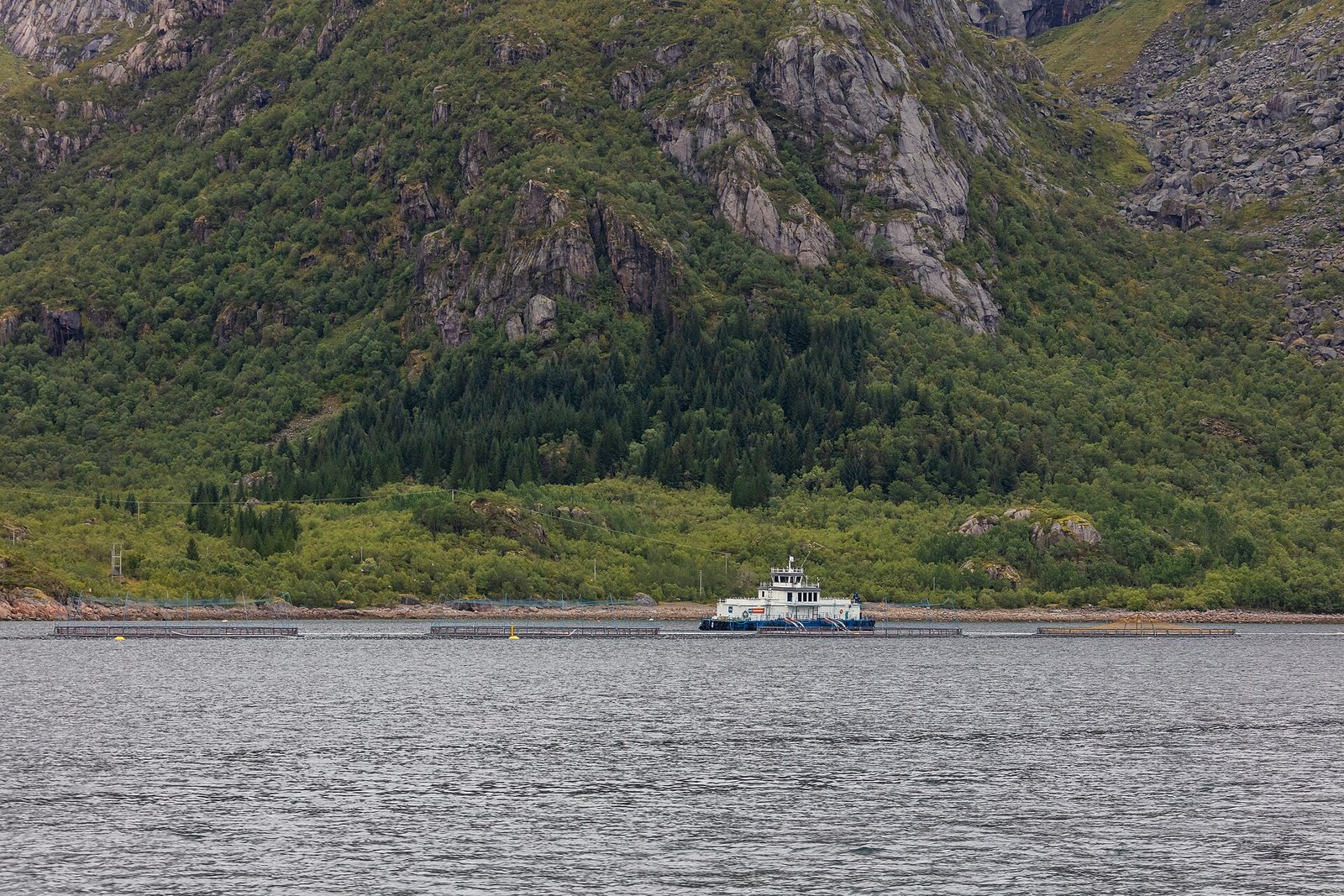
Integrated multi-trophic aquaculture (IMTA) works by turning one species' waste output into another co-located species' nutritional input — fed finfish producing dissolved nutrients and particulate waste that extractive species like shellfish and seaweed can utilize — but the ecological elegance of this concept only translates into commercial benefit if site conditions, physical spacing, and species pairing are genuinely compatible, confirmed through careful planning rather than assumed from the concept's general appeal alone.
The basic IMTA principle
A typical IMTA design co-locates a fed species (commonly finfish) with extractive species positioned to capture and utilize the fed species' waste outputs — shellfish (covered in this cluster's oyster and mussel content) capturing particulate organic waste, and seaweed (covered in this cluster's seaweed content) capturing dissolved inorganic nutrients, particularly nitrogen compounds the fed species' waste releases into the water column.
Site and spatial design requirements
Successful IMTA depends on water flow patterns that actually carry the fed species' waste outputs to where the extractive species are positioned — a site or layout design that doesn't achieve this connectivity produces co-located species that aren't meaningfully interacting in the intended nutrient-exchange relationship, functionally just several separate farms sharing a location without the integration benefit IMTA is meant to provide. Confirm actual water flow and nutrient transport patterns at the candidate site rather than assuming physical proximity alone achieves the intended ecological integration.
Species pairing considerations
Not every fed species and extractive species combination works equally well — appropriate pairing depends on matching waste output characteristics (particulate versus dissolved nutrient profile) to the specific extractive species' capture mechanism, and depends on all species in the system being viable for the specific site's broader conditions (covered in the companion site selection and grow-out methods guides) independent of the IMTA relationship itself.
Realistic expectations for IMTA's commercial benefit
IMTA's nutrient-capture benefit is generally a genuine but secondary production input for the extractive species, not a complete substitute for otherwise sound site selection and species-specific management — treat IMTA as an enhancement to an already sound multi-species operation rather than a way to make an otherwise marginal site or species combination commercially viable through the integration concept alone.
Worked example
An operator set up an IMTA system positioning mussel longlines near an existing fish cage installation, based on the general IMTA concept, without specifically confirming that the site's prevailing current pattern would carry cage-derived nutrients toward the mussel lines' actual position. Growth and yield from the mussel component showed no meaningful improvement over a comparable non-integrated site, and investigation revealed the current pattern largely carried cage outputs away from, rather than through, the mussel line positions. Repositioning the mussel lines to a location the site's actual current pattern confirmed would receive cage-derived nutrient flow produced a measurable improvement in subsequent growth cycles — underscoring that IMTA's benefit depends on confirmed physical nutrient transport, not simply co-location within the same general area.
Common mistakes
- Assuming physical proximity between fed and extractive species achieves meaningful nutrient-exchange integration without confirming actual water flow and transport patterns.
- Pairing species based on the general IMTA concept without confirming the specific extractive species' capture mechanism matches the fed species' actual waste output profile.
- Treating IMTA's nutrient-capture benefit as a substitute for otherwise sound site and species-specific management rather than a secondary enhancement.
- Not evaluating each species' independent site suitability (apart from the IMTA relationship) before committing to the combined system.
Frequently asked questions
Does IMTA require specialized equipment beyond what each individual species' farming method already uses?
Generally not fundamentally — IMTA primarily requires appropriate site selection and spatial positioning of each species' standard farming infrastructure (cages, longlines, seaweed lines) rather than specialized IMTA-specific equipment, though the positioning and layout planning itself is a meaningful design task.
How is actual nutrient transport between IMTA components confirmed before committing to a site layout?
Water flow studies, dye tracing, or consultation with site-specific oceanographic data and experienced regional practitioners can help confirm likely nutrient transport patterns — this confirmation step, as the worked example illustrates, is important enough to warrant genuine investigation rather than assumption based on general proximity.
Can IMTA be implemented with just two species, or does it require the full fish-shellfish-seaweed combination?
Two-species IMTA (such as fish paired with just shellfish, or just seaweed) is viable and commonly practiced — the full three-component combination is one configuration among several, not a strict requirement for a system to be considered genuine IMTA.
Does IMTA reduce regulatory or environmental monitoring requirements compared to single-species farming?
Not necessarily — each component species likely still carries its own applicable regulatory requirements (including, for shellfish components, the biotoxin and water classification monitoring covered elsewhere in this cluster), and IMTA's environmental benefit, while real, does not automatically exempt the operation from standard monitoring and compliance obligations.
How long does it typically take to see measurable production benefit from IMTA integration?
This varies considerably by site, species combination and how well the layout achieves actual nutrient transport — a well-designed system confirmed to achieve genuine integration, as in the worked example's corrected layout, can show benefit within the next production cycle, while a poorly connected layout may show no benefit regardless of how long it continues operating unchanged.