




















Feed Delivery Logistics for Offshore Sites
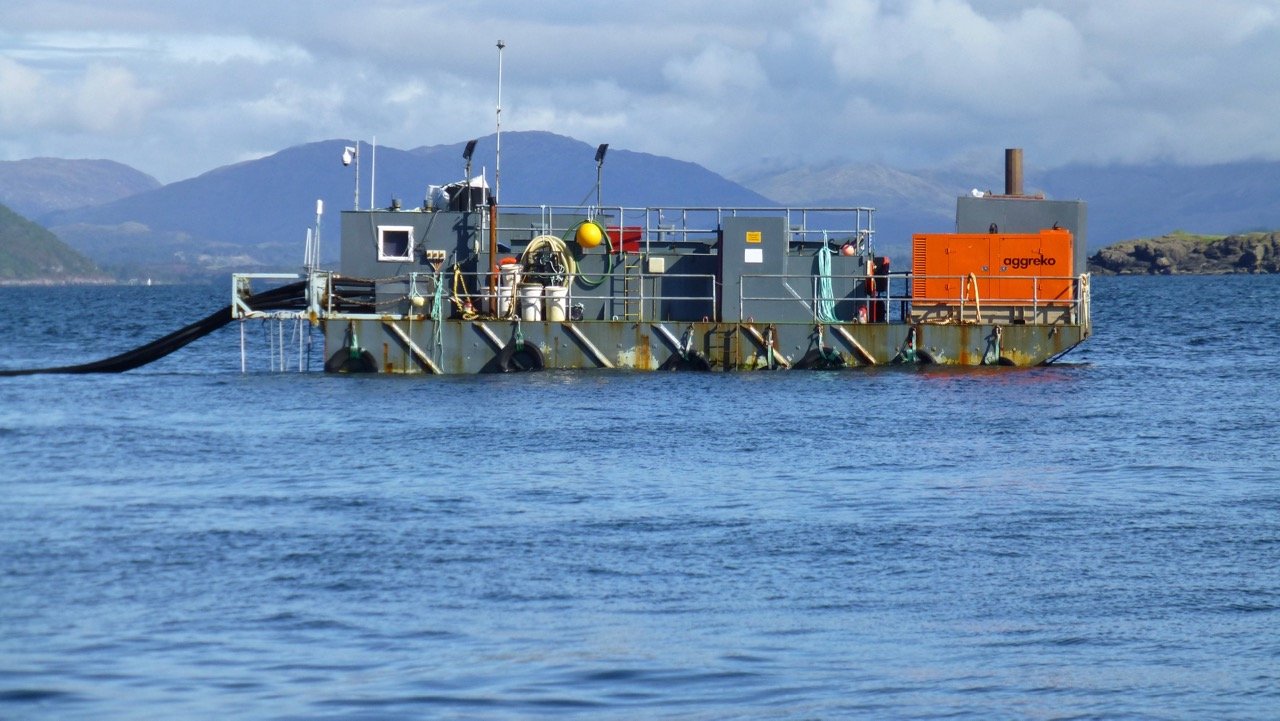
An onshore farm with a feed shortage calls the supplier and gets a truck out within a day or two. An offshore site with the same shortage is waiting on a weather window a vessel can actually run in, and if that window doesn't open for a week, the fish don't eat for a week regardless of how much feed sits warehoused at the supplier's mainland facility. This single structural difference — delivery dependent on sea conditions, not just supplier lead time — is what makes offshore feed logistics its own distinct planning problem, one where the feeding table's numbers matter less than the storage buffer sitting between deliveries.
Why storage capacity is the real planning variable
An onshore operation can run lean on feed storage because resupply is fast and reliable enough that a thin buffer rarely gets tested. An offshore site needs storage capacity sized against the worst realistic weather-delay scenario for its specific location and season, not against the average delivery interval a calm-weather schedule would suggest, since the average interval is exactly the number that fails the first time weather actually disrupts the usual delivery rhythm. A site planning storage against "feed typically arrives every ten days" rather than "feed delivery has been delayed up to three weeks during past winter storm seasons" is planning against the wrong risk entirely — the average tells you what normally happens; the worst case tells you what you actually need to survive.
Seasonal weather patterns change the buffer requirement through the year
Weather-delay risk isn't constant across a year at most offshore sites — winter storm seasons, monsoon periods, or other predictable seasonal weather patterns compress the realistic delivery window far more in some months than others, meaning a storage buffer sized adequately for a calm summer stretch can be genuinely inadequate heading into a site's specific high-risk season. Farms operating offshore sites with well-documented seasonal weather patterns should plan storage capacity and delivery scheduling specifically against the upcoming season's known risk profile, building buffer up ahead of a predictable high-risk period rather than discovering the gap only once a storm has already cut off resupply mid-season.
Vessel availability as its own separate constraint
Weather is only one half of the delivery-reliability equation — a site also depends on an actual vessel being available and scheduled to make the run when a weather window does open, and vessel availability itself can be constrained by maintenance schedules, competing demand from other sites or clients the same vessel operator serves, or simple scheduling conflicts that have nothing to do with sea conditions at all. A farm relying on a single vessel or a single logistics provider for all offshore resupply has a single point of failure that weather risk alone doesn't fully capture — a backup vessel arrangement, or at minimum a documented contingency plan for an unavailable primary vessel, addresses a failure mode that pure weather-buffer storage planning doesn't cover.
Feed stability during extended offshore storage
Feed sitting in offshore storage for longer stretches, whether due to deliberately built-up seasonal buffer or an unplanned weather delay, needs the same storage-condition discipline discussed broadly in feed-stability contexts — temperature, humidity, and exposure control matter as much or more on an offshore platform or barge, where storage conditions are often harder to control precisely than a climate-controlled onshore warehouse, as they do anywhere else feed sits for an extended period. A site building a larger weather buffer specifically to survive extended resupply gaps should weigh the oxidation and quality-degradation risk that larger buffer introduces against the alternative risk of running too thin and running out, rather than treating "more buffer is always safer" as a universal rule that ignores feed's own shelf-life limits.
Calculating the actual buffer you need
Sizing a storage buffer correctly starts with your site's actual historical weather-delay data, not a generic industry assumption, combined with your current standing biomass and feeding rate to determine how many days of feed that buffer needs to cover under a worst-realistic-case delay. Run this calculation explicitly using the feed stock calculator, modeling your site's specific worst-case delay scenario rather than its average delivery interval, and revisit the calculation whenever standing biomass changes meaningfully through a production cycle, since the same storage buffer that covered a smaller, younger cohort adequately can fall short once that cohort has grown into a larger standing biomass consuming considerably more feed per day.
Rationing decisions once a shortage is actually underway
Despite good buffer planning, a severe or unusually prolonged weather event can still push a site toward an actual feed shortage, and the decision for how to handle that shortfall matters: cutting ration uniformly across the whole standing biomass preserves the overall population at a reduced growth rate, while prioritizing feed to specific units or cohorts (the ones closest to a planned harvest, say, or the ones with the least physiological reserve to tolerate restriction) concentrates the shortage's impact rather than spreading it evenly. Neither approach is universally correct — a farm close to a harvest date for part of its biomass may rationally prioritize feeding that cohort fully while accepting a harder restriction on a younger cohort with more time to recover, but this decision needs to be made deliberately and in advance of an actual crisis, not improvised in the moment when a shortage is already underway and emotions and schedule pressure are both running high.
Coordinating resupply timing with feeding-curve planning
Offshore sites following a temperature-responsive feeding curve, adjusting daily ration against actual water temperature and appetite rather than a flat schedule, face a planning wrinkle that onshore sites with reliable daily delivery don't: a feeding curve that calls for a higher ration during a warm-water stretch needs that higher consumption rate reflected in the storage-buffer calculation too, since a buffer sized against an average or lower seasonal consumption rate will deplete faster than planned if a warm spell pushes actual feeding rate above what the buffer assumed. Coordinating the feeding-curve plan and the delivery-logistics plan explicitly, rather than treating them as two separate planning exercises run independently, catches this kind of interaction before it produces an unplanned shortage during exactly the warm-water growth window a farm most wants to avoid disrupting.
Multiple sites sharing one vessel or logistics provider
Many offshore logistics providers serve several farm sites on a shared delivery rotation, which means one site's delivery schedule is implicitly dependent on every other site on that rotation running smoothly — a delay or an emergency resupply need at one site in the rotation can push back the next site's scheduled delivery even when that second site's own conditions are perfectly calm. A farm sharing offshore logistics capacity with other operations should build this shared-resource dependency into its own buffer planning explicitly, since the weather risk at your own site is only part of the actual delivery-reliability picture when the vessel serving you also serves several other sites with their own independent weather and emergency-resupply risks layered on top of yours.
Documenting the plan so it survives a staff change
An offshore resupply contingency plan that exists only in one logistics coordinator's head, built from years of accumulated experience with a specific site's weather patterns and vessel relationships, disappears the day that person leaves or is simply unavailable during an actual crisis. Writing the plan down — expected delivery intervals by season, documented worst-case delay history, backup vessel contacts, and the agreed rationing priority decisions discussed above — turns institutional knowledge into an asset the operation can rely on regardless of who's on shift when an actual weather emergency forces the plan into action, rather than discovering during the crisis itself that the only person who knew the contingency plan is the one person unavailable to execute it.
Frequently asked questions
Why can't an offshore site just plan feed storage around the typical delivery schedule?
Because the typical schedule is exactly the number that fails the first time weather actually disrupts it. A buffer sized against the average delivery interval provides no real protection against the worst-case delay scenario that offshore weather risk actually creates — storage needs to be sized against that worst case, not the average.
Does weather-delay risk stay the same throughout the year?
No. Most offshore sites face predictable seasonal patterns — storm seasons, monsoon periods — that compress the realistic delivery window far more in certain months than others. Storage buffer should be planned against the upcoming season's specific risk, built up ahead of a known high-risk period rather than discovered as inadequate once that period arrives.
Is weather the only thing that can delay an offshore feed delivery?
No. Vessel availability is a separate constraint — maintenance schedules, competing demand from other clients, or scheduling conflicts can delay delivery even when sea conditions would otherwise allow it. Relying on a single vessel or logistics provider creates a single point of failure that weather-buffer planning alone doesn't address.
Does building a larger feed buffer for weather risk create its own problem?
It can. Feed sitting in storage longer, especially under offshore conditions that are often harder to control than a climate-controlled onshore warehouse, faces the same oxidation and quality-degradation risk any extended storage period creates. A larger buffer needs to weigh that quality risk against the risk of running too thin.
How often should an offshore site recalculate its storage buffer?
Whenever standing biomass changes meaningfully through a production cycle. A buffer sized adequately for a smaller, younger cohort's feeding rate can fall short once that cohort grows into a larger standing biomass consuming considerably more feed per day at an unchanged buffer size.
Does sharing a vessel with other sites affect delivery reliability?
Yes. Many offshore logistics providers run a shared rotation across several sites, so a delay or emergency resupply at one site can push back deliveries to another site even when that second site's own weather is calm. Buffer planning should account for this shared-resource dependency, not just your own site's weather risk.
Key takeaways
- Offshore feed storage needs to be sized against the worst realistic weather-delay scenario for the specific site and season, not the average delivery interval that normally works fine.
- Seasonal weather patterns mean buffer requirements change through the year; plan ahead of a known high-risk season rather than discovering the gap once it arrives.
- Vessel availability is a separate risk from weather and deserves its own contingency plan, since a single-vessel dependency is a point of failure weather-buffer storage alone doesn't cover.
- Larger storage buffers introduce their own feed-quality degradation risk over extended storage time, which needs to be weighed against the risk of running out.
- Recalculate storage buffer requirements whenever standing biomass changes meaningfully, since a buffer adequate for a smaller cohort can fall short once that cohort has grown.