




















Nitrate Accumulation in RAS and Denitrification Options
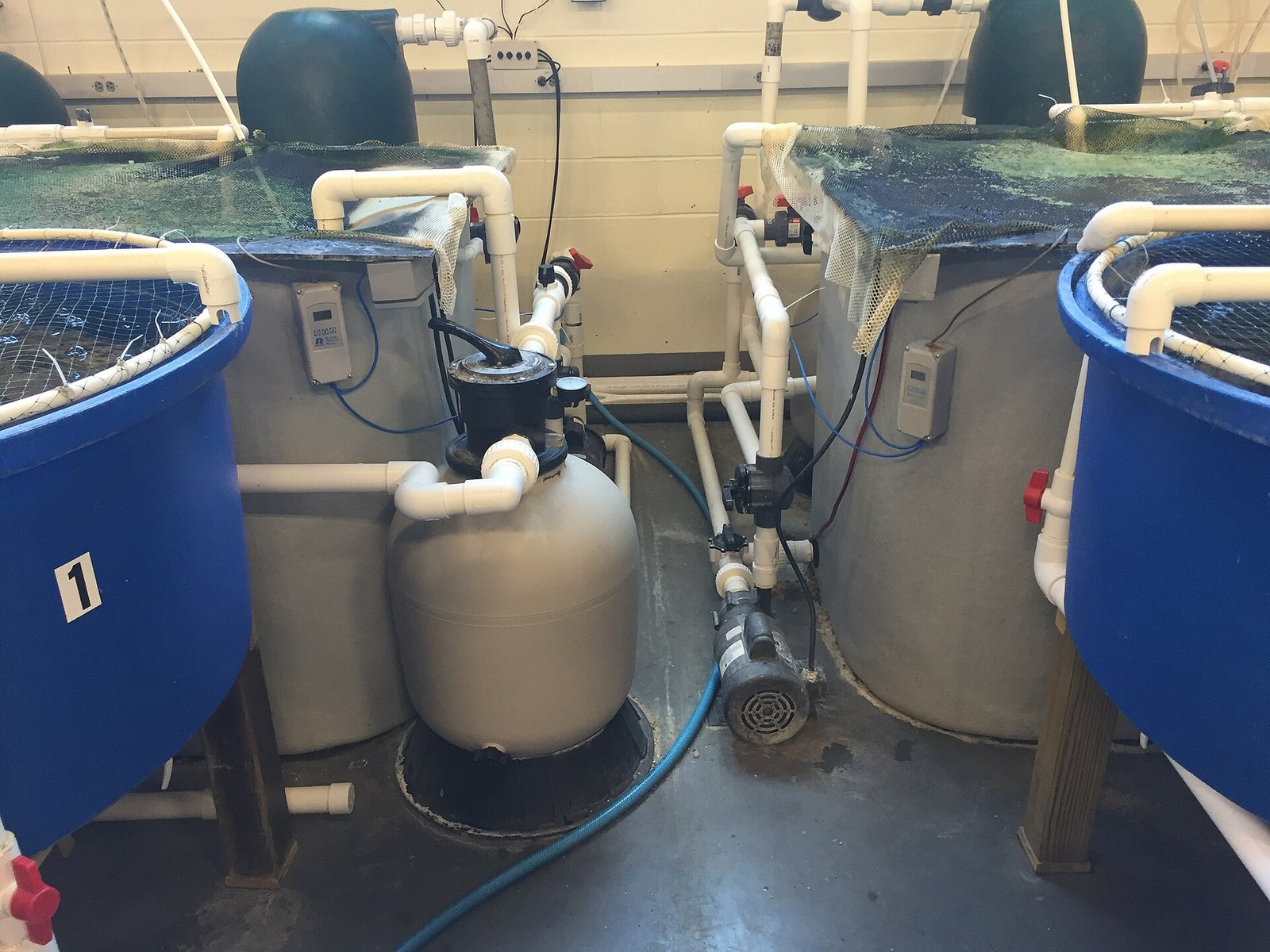
Nitrification converts ammonia to nitrite, then nitrite to nitrate, and stops there — the bacteria responsible for that two-step process have no further metabolic pathway to break nitrate down any further. In a flow-through or pond system with meaningful water exchange, this doesn't matter much, since incoming fresh water dilutes accumulating nitrate before it reaches a concerning concentration. In a RAS running low water exchange specifically to conserve water and heating cost, nitrification's dead-end product has nowhere to go, and concentration climbs steadily, cycle after cycle, for as long as the system keeps feeding fish and nitrifying their waste without a separate mechanism built to remove it.
Why nitrate matters even though it's the "safe" endpoint
Nitrate is dramatically less acutely toxic than ammonia or nitrite, which is exactly why nitrification is considered the goal rather than the problem in most basic water-quality education — converting ammonia to nitrate genuinely does remove the acute, fast-acting threat. But nitrate at sufficiently high chronic concentration still causes real harm: reduced growth, impaired reproduction in broodstock contexts, and increased susceptibility to other stressors, developing gradually over weeks rather than the hours-to-days timeline that defines an acute ammonia or nitrite event. This chronic-versus-acute distinction is why a RAS operator checking only for "is nitrate below the acutely toxic threshold" can still be running a system with a genuine, costly nitrate problem the acute-threshold framing simply wasn't built to catch.
Water exchange: the simple fix that costs the thing RAS exists to save
The most straightforward nitrate control is water exchange itself — replacing a portion of system water with fresh, nitrate-free water dilutes accumulated nitrate directly and reliably. The problem is that this is exactly the resource RAS is designed to conserve: water volume, and in many systems the energy cost of heating that replacement water to operating temperature. A RAS operator leaning on water exchange as the primary nitrate control is undermining a meaningful share of the water and energy savings that justified choosing RAS over a flow-through system in the first place, which is why serious low-exchange RAS designs look toward dedicated biological removal rather than accepting a higher exchange rate as the default nitrate solution.
Denitrification: a second biological process, running in the opposite direction
Denitrification is a distinct microbial process, carried out by different bacteria than nitrification, that converts nitrate back into nitrogen gas, which then simply leaves the water as a harmless atmospheric gas rather than accumulating as a dissolved compound. This process requires anaerobic or low-oxygen conditions — the opposite environment nitrification needs — and an available carbon source to fuel the bacteria running it, meaning a dedicated denitrification reactor is typically built as a separate stage from the main nitrifying biofilter specifically because the two processes need genuinely incompatible operating conditions to run efficiently side by side.
Why denitrification reactors need careful carbon dosing
Denitrifying bacteria need an organic carbon source to fuel the reaction, commonly dosed as a specific feedstock (methanol, ethanol, acetate, or a proprietary commercial product depending on system design) at a rate matched to the actual nitrate load being processed — too little carbon limits denitrification efficiency and leaves nitrate removal incomplete, while too much carbon dosed into an anaerobic reactor can produce its own water-quality complications if excess, undenitrified carbon makes its way back into the main system. This carbon-dosing precision requirement is conceptually similar to the carbon dosing discussed in biofloc shrimp systems, though the two processes serve entirely different purposes — one grows bacterial biomass as a nitrogen-assimilation and shrimp-feed strategy, the other specifically removes nitrate as its primary function, with no feed-value byproduct intended.
Sizing denitrification capacity against actual nitrate production
Nitrate production scales directly with feeding rate and the ammonia load the main biofilter is already processing, meaning a denitrification stage needs to be sized against the same feeding-rate and biomass projections used to size the rest of the system, not retrofitted as an afterthought once nitrate has already climbed to a concerning level. A system expanding stocking density or feeding rate without reassessing denitrification capacity risks outgrowing its nitrate-removal capability at the same rate it outgrows other system parameters, a mismatch that often goes unnoticed longer than an oxygen or ammonia capacity shortfall would, since nitrate's chronic rather than acute effect gives the problem more time to compound quietly before anyone investigates.
Alternatives and partial solutions worth knowing about
Not every low-exchange RAS needs a dedicated anaerobic denitrification reactor — some systems manage nitrate through a combination of modest, carefully budgeted water exchange plus denitrification, rather than relying entirely on either approach alone, and some operators use algae or plant-based nutrient uptake systems (aquaponics-adjacent approaches) that consume nitrate as a plant nutrient rather than converting it to gas, achieving a similar practical removal effect through an entirely different biological mechanism. The right approach depends on a system's specific scale, water-exchange cost structure, and whether a secondary nutrient-uptake crop (plants, in an integrated system) offers additional commercial value beyond pure nitrate removal.
Species sensitivity to chronic nitrate varies considerably
Not every farmed species shows the same tolerance for elevated chronic nitrate, and freshwater species generally show different sensitivity profiles than marine species at a comparable nitrate concentration, partly because marine species already operate with higher baseline ion exchange across their gills from managing seawater osmoregulation, which can buffer some nitrate-related physiological stress differently than a freshwater species experiences it. A RAS operator applying a nitrate threshold borrowed from a different species' published tolerance range, rather than one specifically validated for the target species, risks either an overly conservative, unnecessarily expensive denitrification investment or an inadequate one that still allows chronic harm, depending on which direction the borrowed threshold happens to miss the target species' actual tolerance.
Monitoring nitrate alongside, not instead of, the acute parameters
Because nitrate accumulates slowly and its effects develop gradually, it's tempting for a busy operation to deprioritize nitrate testing relative to the acute-threat parameters (ammonia, nitrite, dissolved oxygen) that demand more urgent daily attention. This is a reasonable allocation of urgent attention but a poor allocation of total monitoring effort if it means nitrate goes unchecked for weeks at a stretch — a system can pass every acute water-quality check perfectly while nitrate climbs steadily toward a chronic-harm threshold in the background, invisible to a monitoring protocol that's tuned entirely around acute-event detection. A practical compromise many operations use is a less frequent but still regular nitrate testing schedule, weekly or biweekly rather than the daily or near-daily checks acute parameters warrant, keeping nitrate visible without demanding the same monitoring intensity the faster-moving acute risks genuinely require.
Commissioning a new denitrification reactor takes real time
A newly installed denitrification reactor doesn't reach full operating efficiency immediately — the specific anaerobic bacterial population needs time to establish at the density and maturity required for reliable nitrate conversion, a startup period that can run from several weeks to a couple of months depending on reactor design and starting conditions, similar in principle to the biofilter maturation period any new nitrifying system needs before reaching full capacity. A farm installing a new denitrification stage should plan for this commissioning period explicitly, continuing whatever interim nitrate-control measure (increased water exchange, reduced stocking density) the system relied on before the new reactor existed, rather than assuming the reactor provides full removal capacity from the day it's switched on.
Retrofitting denitrification into an already-struggling system
A RAS already showing elevated nitrate from years of relying purely on water exchange, now facing a retrofit decision to add proper denitrification capacity, faces a double transition: bringing a new reactor online while simultaneously working down an existing nitrate backlog that accumulated before the retrofit, rather than starting from a clean baseline the way a newly built system would. This transition period benefits from active monitoring and a deliberate plan for managing the existing elevated nitrate down toward target range gradually, rather than assuming the new reactor's steady-state removal capacity alone will handle both the backlog and ongoing production simultaneously at the same pace it would handle ongoing production from a normal starting point.
Frequently asked questions
Is nitrate actually dangerous, or is reaching nitrate the end of the water-quality problem?
Nitrate is far less acutely toxic than ammonia or nitrite, but sufficiently high chronic nitrate concentration still causes reduced growth, impaired reproduction, and increased stress susceptibility developing over weeks. Checking only against an acute toxicity threshold misses this slower, chronic effect entirely.
Why can't the same biofilter that converts ammonia to nitrate also remove the nitrate?
Nitrifying bacteria have no further metabolic pathway to break nitrate down — their process stops at nitrate. Removing nitrate requires a genuinely different microbial process, denitrification, carried out by different bacteria under different, largely incompatible operating conditions.
Why does denitrification need a separate reactor instead of running alongside nitrification?
Denitrification requires anaerobic or low-oxygen conditions and a carbon source, essentially the opposite environment nitrification needs to function efficiently. Running both processes in the same space compromises one or both, which is why serious system designs separate them into distinct stages.
What happens if a denitrification reactor is dosed with too much or too little carbon?
Too little carbon limits denitrification efficiency, leaving nitrate removal incomplete. Too much carbon dosed into an anaerobic reactor risks excess, undenitrified carbon making its way back into the main system and creating its own water-quality complications there.
Does every low-exchange RAS need a dedicated denitrification reactor?
Not necessarily. Some systems manage nitrate through a combination of modest water exchange and partial denitrification, and some use algae or plant-based nutrient uptake as an alternative removal mechanism, particularly where that secondary crop offers additional value beyond pure nitrate control.
Does a new denitrification reactor remove nitrate at full capacity from day one?
No. The anaerobic bacterial population needs weeks to a couple of months to establish at the density needed for reliable conversion, similar to any new biofilter's maturation period. A farm should maintain its previous interim nitrate control through this commissioning window rather than assuming full capacity immediately.
Key takeaways
- Nitrification has no mechanism to remove the nitrate it produces, so nitrate accumulates continuously in a low-exchange RAS unless something is specifically built to remove it.
- Nitrate's chronic toxicity (reduced growth, impaired reproduction, increased stress susceptibility) develops over weeks, meaning a system checked only against acute thresholds can still carry a real, undiagnosed nitrate problem.
- Water exchange dilutes nitrate directly but costs the same water and energy savings that justify choosing RAS, making it a poor long-term primary solution for a low-exchange design.
- Denitrification is a distinct, carbon-fueled anaerobic microbial process that converts nitrate back into harmless nitrogen gas, and needs its own reactor stage separate from the main nitrifying biofilter.
- Denitrification capacity should be sized against the same feeding-rate and biomass projections used for the rest of the system, not added as an afterthought once nitrate has already become a problem.
Related reading
- Water Replacement and Make-Up Water Rules for Closed Systems
- RAS Biofilters: How Nitrification Drives Water Reuse
- RAS Startup and Maturation: Cycling a New Biofilter Safely
- Aquaponics System Startup: Cycling Fish and Plant Beds Together
- Daily Aquaponics Operating Checklist: Fish, Biofilter and Grow Bed Balance
- Water Quality Parameters: Managing pH, Ammonia and Nitrite