
















Starter Feeds and Weaning Diets for Marine Larvae
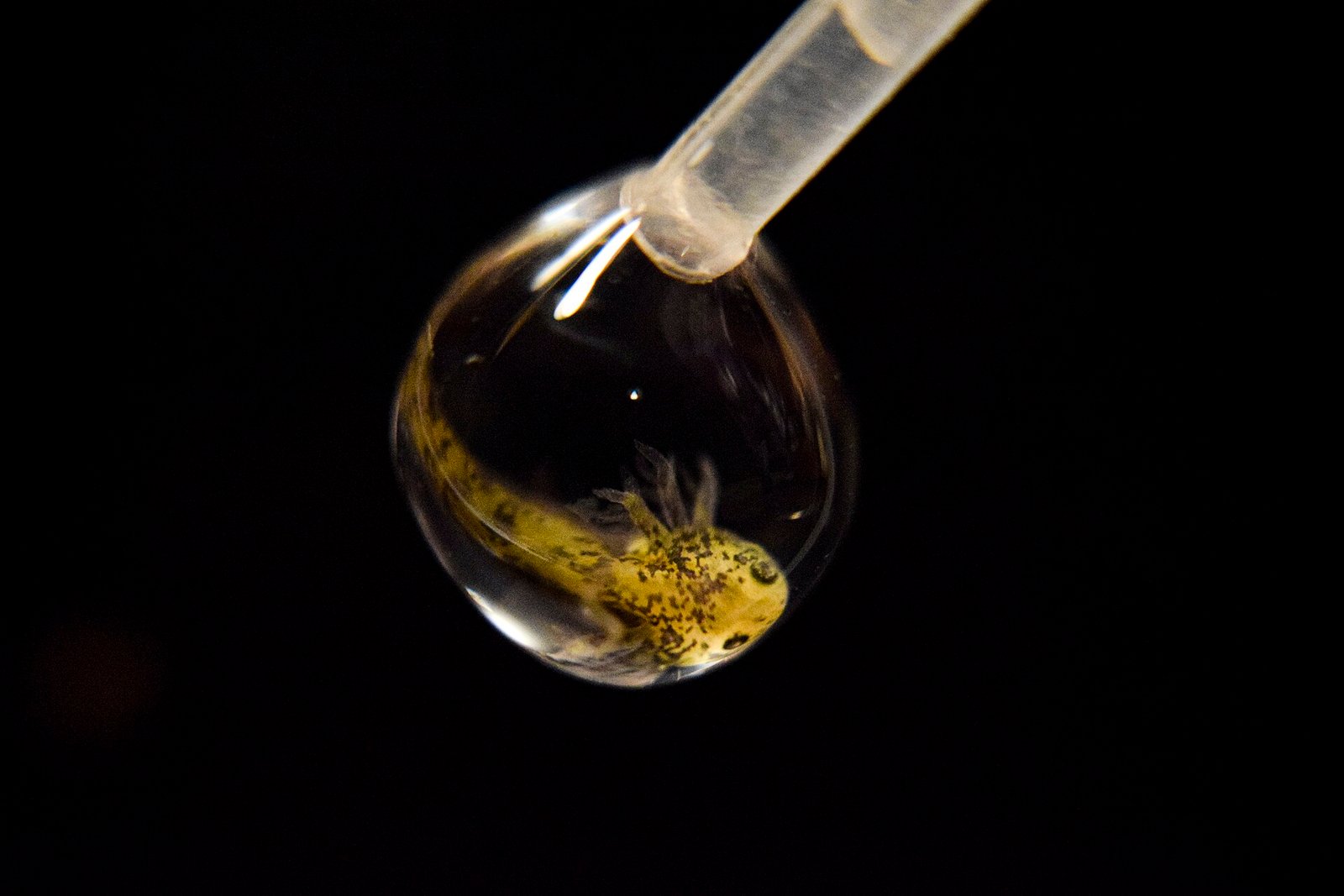
A marine fish larva at first feeding has an incompletely developed digestive system, limited swimming and visual capability, and no ability to process a formulated feed particle the way a juvenile or adult fish can — which is exactly why hatcheries feed live prey (rotifers, then Artemia) rather than starting directly on formulated diets, and why the eventual weaning transition from that live feed onto formulated starter feed is one of the highest-mortality-risk windows in the entire hatchery-to-market production chain.
Why live feed comes first
Live prey organisms move, triggering the visual and motion-detection feeding response larvae rely on at a stage when their sensory and swimming capability is still limited, and live prey's nutritional composition, particularly when the prey itself has been enriched with specific fatty acids and other nutrients before being fed to larvae, can be tuned to match larval nutritional needs more precisely than an early-generation formulated feed could reliably match at this life stage. This combination, a feeding-response trigger formulated particles can't replicate as effectively at this early stage, plus a nutritionally tunable live prey item, is why live feed remains the standard starting point for marine larval rearing despite the extra culture infrastructure and labour it requires relative to simply feeding a formulated starter diet from day one.
The weaning transition: where risk concentrates
Weaning shifts larvae from live prey to formulated feed, typically introduced gradually by co-feeding both simultaneously for a transitional period rather than switching abruptly, since larvae don't reliably and immediately recognise a static formulated particle as food the way they recognise moving live prey, and an abrupt switch risks a feeding gap where larvae simply don't eat enough during the adjustment period. This transition's risk concentrates specifically around whether larvae successfully learn to recognise and consume the formulated diet before their body condition, built up during the live-feed phase, depletes faster than the formulated diet can replace it — a race between learning a new feeding behaviour and running out of physiological reserve that's exactly why weaning timing and co-feeding duration are managed carefully rather than rushed purely to reduce live-feed culture costs sooner.
Why rushing the transition costs more than it saves
Live feed culture (rotifers and Artemia production) represents a genuine ongoing cost and labour burden relative to formulated feed, creating a real incentive to wean larvae onto cheaper formulated feed as early as practically possible. But weaning too early, before larvae are developmentally and behaviourally ready to reliably recognise and consume the formulated diet, risks a feeding gap that can depress survival and growth enough to erase whatever live-feed-culture cost saving the early transition was meant to capture, since a hatchery losing a meaningful share of a batch to a mistimed weaning transition loses far more value than the live-feed cost saved by weaning a few days earlier than development actually supported.
Signals that inform weaning timing
Hatcheries assess weaning readiness against a combination of signals rather than a fixed day-count alone: larval developmental stage and size (since formulated particle size needs to match developing mouth gape, the same mouth-gape arithmetic that governs pellet-size-by-weight transitions later in life, just compressed into a much faster-moving timeline), observed feeding response to trial formulated feed introduced alongside ongoing live feed, and overall batch condition and growth trajectory relative to the specific species' typical developmental timeline. A hatchery weaning purely against a fixed calendar schedule without checking these developmental and behavioural signals specifically is more likely to either wean too early for a slower-developing batch or hold live feeding longer than necessary for a batch that was actually ready sooner, in either case leaving value on the table relative to a readiness-informed transition timing.
Formulated starter feed quality and particle characteristics
Formulated starter feeds for weaning larvae need extremely fine particle size matched to larval mouth gape at the specific weaning stage, water stability sufficient to avoid rapid nutrient leaching given how long a small particle might sit in water before a still-learning larva locates and consumes it, and nutritional composition specifically formulated for the larval stage's particular requirements rather than simply a smaller-ground version of a juvenile formulated diet. This specificity is why larval starter feeds represent their own distinct, more technically demanding product category within the broader formulated feed market discussed throughout this series, commanding a price premium over standard grow-out feed that reflects the genuine additional formulation and manufacturing precision this life stage requires.
Post-weaning transition to juvenile formulated feed
Once successfully weaned onto a starter formulated diet, larvae progress through a further series of formulated feed transitions as they grow toward the post-larvae stage and beyond, each transition following the same mouth-gape-matching and readiness-based timing logic the initial weaning transition established, just at progressively larger particle sizes and lower relative risk as the fish's digestive system and feeding behaviour mature and stabilise. The highest-risk transition remains the initial live-feed-to-formulated-feed weaning specifically, since every subsequent transition benefits from a progressively more developed, more behaviourally established feeding fish working with a progressively lower-stakes size-matching problem than the initial weaning transition's combination of behavioural learning and physiological risk together.
Species differences in weaning difficulty
Not every marine species weans with equal difficulty, and a hatchery's accumulated species-specific experience matters considerably here — some species transition from live feed to formulated diet relatively smoothly within a well-understood protocol window, while others — pikeperch among the more notorious examples — present a genuinely harder weaning challenge that remains less standardised even after considerable research and commercial attention. A hatchery entering production of a new species for the first time should treat published weaning protocols from other species or even from limited early research on the target species itself with appropriate caution, expecting to refine timing and technique through its own accumulated batch experience rather than assuming a generically described weaning window transfers precisely from a different, even closely related, species.
Tank environment and weaning success
Beyond the feed transition itself, tank environmental conditions during the weaning window, water flow pattern affecting how formulated particles distribute and remain available, lighting affecting larval visual feeding behaviour, and stocking density affecting competition for the still-unfamiliar formulated feed, all interact with weaning success independent of the feed formulation and timing decisions discussed above. A hatchery troubleshooting a difficult weaning transition should consider tank environmental factors alongside feed-specific variables, since a well-designed formulated diet introduced at developmentally appropriate timing can still underperform if tank conditions don't support larvae actually encountering and successfully consuming it at a rate matching what the transition protocol assumed.
Record-keeping across batches
Because weaning timing and technique benefit so directly from a hatchery's own accumulated experience rather than purely from generic published protocols, systematic record-keeping across successive batches, tracking weaning timing decisions, observed feeding response, and eventual survival and growth outcomes, builds the kind of hatchery-specific knowledge base that progressively improves weaning success over successive production cycles. A hatchery treating each batch's weaning transition as an isolated event without this kind of systematic record-keeping misses the opportunity to refine its own protocol based on its own specific facility, water conditions and broodstock-sourced larval characteristics, relying indefinitely on generic external guidance that a few seasons of disciplined internal record-keeping could meaningfully improve upon.
Economic weight of the weaning window in overall hatchery economics
Given how much hatchery survival and the eventual number of juveniles available for grow-out depend on weaning success specifically, the weaning transition deserves proportionally more management attention and monitoring investment relative to its actual duration (typically a relatively short window within the overall larval-rearing timeline) than its brief duration alone might suggest, since a poor weaning outcome compounds into reduced juvenile output that affects every subsequent stage of the production chain downstream from the hatchery. It's the same logic that makes bluefin tuna's capture-and-transfer phase the highest-stakes event in that cycle — a brief but critical window where a disproportionate share of total production risk concentrates, warranting correspondingly disproportionate attention relative to its short duration within the overall production timeline.
Frequently asked questions
Why can't marine fish larvae be fed a formulated diet from first feeding?
Their digestive system is incompletely developed and their sensory and swimming capability is limited, meaning they rely on the motion-detection feeding response live prey triggers and the nutritionally tunable composition live feed offers, neither of which an early-generation formulated particle reliably replicates at this life stage.
Why is weaning done gradually rather than as an abrupt switch?
Larvae don't reliably and immediately recognise a static formulated particle as food the way they recognise moving live prey. Co-feeding both simultaneously for a transitional period avoids a feeding gap where larvae might not eat enough while still learning to recognise the new diet.
What happens if a hatchery weans larvae too early to save on live-feed costs?
A feeding gap can develop where larvae haven't yet learned to reliably consume the formulated diet while their live-feed-built body condition depletes, risking survival and growth losses that typically outweigh whatever live-feed-culture cost the early transition was meant to save.
How do hatcheries know when larvae are ready to wean?
By assessing developmental stage and size relative to formulated particle size, observed feeding response to trial formulated feed introduced alongside live feed, and overall batch condition and growth trajectory, rather than following a fixed calendar schedule alone.
Why do larval starter feeds cost more than standard grow-out feed?
They require extremely fine particle size matched to larval mouth gape, strong water stability given how long a small particle may sit before a still-learning larva finds it, and nutritional composition specifically formulated for the larval stage, making them a more technically demanding, higher-precision product category.
Does weaning difficulty vary by species?
Yes, considerably. Some species transition relatively smoothly within a well-understood protocol window, while others remain genuinely harder to wean even after significant research attention. Published protocols from other species should be treated cautiously, with timing refined through a hatchery's own accumulated batch experience with the specific target species.
Key takeaways
- Live feed remains the standard starting point for marine larval rearing because it triggers a motion-based feeding response and offers nutritionally tunable composition that early-generation formulated particles can't reliably match at this life stage.
- The live-feed-to-formulated-feed weaning transition is the highest-mortality-risk window in the hatchery cycle, since it combines a behavioural learning challenge with a physiological depletion race.
- Weaning too early to save on live-feed costs typically costs more in survival and growth loss than it saves, making readiness-based timing more valuable than calendar-based timing.
- Weaning readiness should be assessed against developmental stage, observed feeding response and batch condition, not a fixed day-count schedule alone.
- Larval starter feeds are a distinct, more technically demanding product category than standard grow-out feed, commanding a price premium that reflects genuine added formulation precision.
Related reading
- First Feeding of Larvae: Timing, Live Feed and Weaning Protocols
- Larval Rearing Daily Routine: Feeding, Siphoning and Water Exchange Schedule
- Pikeperch (Sander lucioperca) in RAS: Opportunities and Challenges
- Live Feeds: Rotifer Culture Step by Step
- Live Feed Enrichment Protocols: Boosting HUFA Content Before Feeding
- How to Build a Feeding Programme from Larvae to Market Size