
















Live Feeds: Rotifer Culture Step by Step
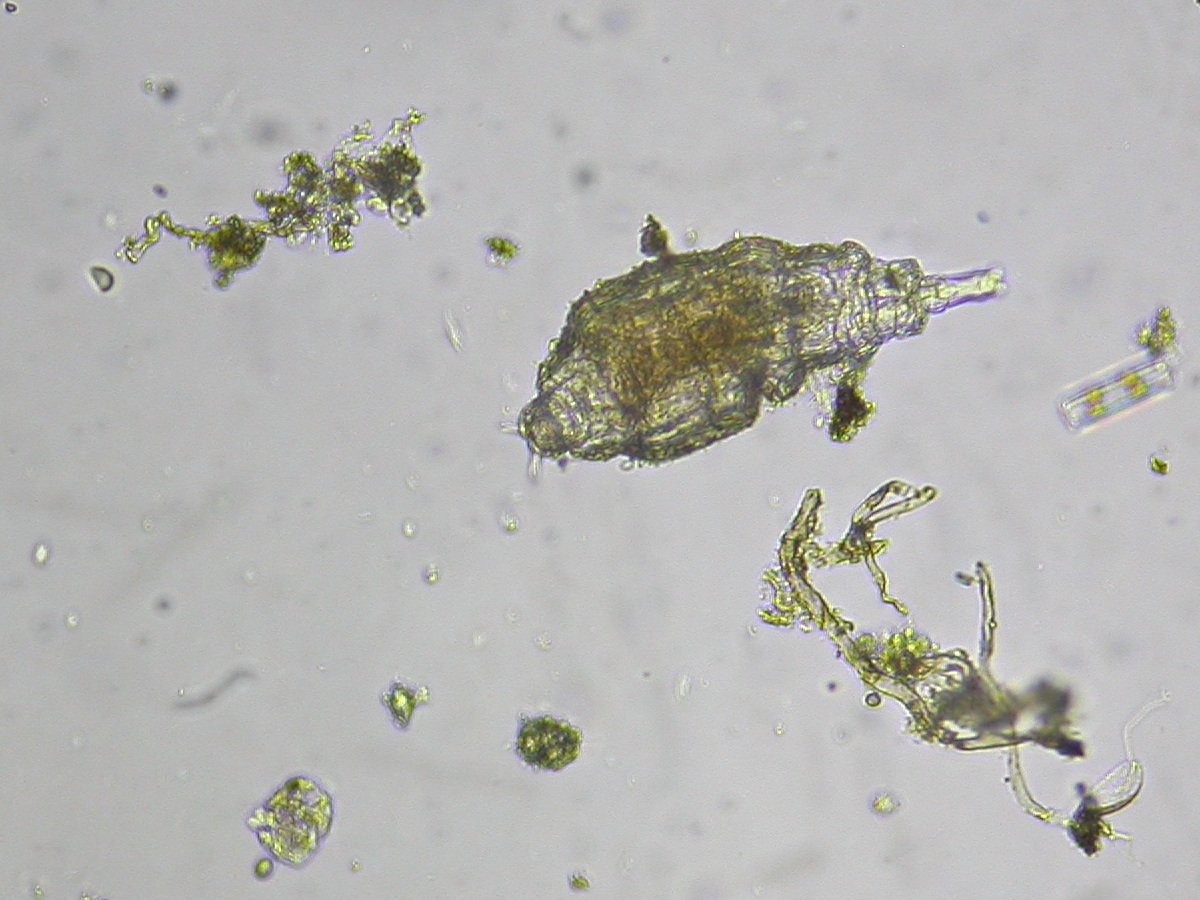
Rotifers (commonly Brachionus species) are themselves filter feeders grazing on microalgae, which means rotifer culture is really microalgae culture with an extra trophic step added on top — a hatchery producing rotifers is actually running two interdependent cultures simultaneously, the microalgae feeding the rotifers and the rotifers eventually feeding the larvae, and a failure anywhere in that chain propagates directly to whatever larval batch is depending on the rotifers being ready on schedule.
Why rotifers specifically
Rotifers are small enough and move in a way that triggers first-feeding larvae's motion-detection feeding response at a life stage when larvae can't yet handle larger prey like Artemia, filling the critical gap between hatching and the point where larvae are developed enough to transition to larger live feed and eventually formulated diet, discussed elsewhere in this series' coverage of the weaning transition. Their fast reproduction rate under good culture conditions also makes rotifers practical to produce in the volume a hatchery needs, since a slower-reproducing live feed organism would struggle to scale production to match the larval feeding demand a commercial hatchery's larval batches actually require.
Culture density: the number that determines everything downstream
Rotifer culture density, tracked through regular sampling and counting, is the primary operational metric a hatchery manages day to day, since density directly determines both how much feed (microalgae or a commercial algal paste substitute) the culture needs and how many rotifers are actually available to harvest for a given day's larval feeding need. Density management requires active, continuous attention rather than a set-and-check-occasionally approach, since rotifer populations can grow or crash relatively quickly relative to a hatchery's planning horizon, meaning a culture checked only infrequently risks either overgrowing past the point where water quality and feed supply can keep pace, or crashing before the hatchery notices and can react.
Enrichment: making rotifers nutritionally useful, not just available
Raw rotifer nutritional composition alone often doesn't match what larvae specifically need, particularly for long-chain omega-3 fatty acid content discussed elsewhere in this series' coverage of fish oil and algal oil, which is why rotifers are typically enriched, fed a specific nutrient-dense supplement for a period before harvest specifically to boost their own nutritional content before they're fed to larvae, essentially using the rotifer as a nutrient-delivery vehicle customised for the target larvae's actual requirements rather than relying on the rotifer's own baseline nutritional profile alone. Enrichment timing matters directly: rotifers harvested too soon after enrichment feeding began haven't yet accumulated the target nutrient boost, while rotifers held too long after enrichment can metabolise away some of that boost before being fed, meaning enrichment protocols specify a fairly precise window between enrichment feeding and harvest that a hatchery needs to actually follow rather than treating enrichment as a loose, approximate practice.
Water quality and the crash risk
Rotifer cultures, like any dense, actively growing biological system, generate waste and consume oxygen in a way that requires active water-quality management, and a culture allowed to run too dense relative to its water-quality management capacity risks a population crash, a sudden, often rapid collapse in rotifer numbers that can eliminate a culture's usable output just when a hatchery needs it for scheduled larval feeding. This crash risk is why experienced hatchery operators monitor water quality alongside density, treating the two as interconnected variables rather than managing density purely against a target number without equal attention to whether the culture's water-quality capacity can actually sustain that density safely.
Scaling production to match larval demand
Because rotifer culture output needs to match a specific larval batch's feeding schedule, hatcheries typically run rotifer production on a staggered, continuous cycle, maintaining multiple culture vessels at different stages of growth simultaneously rather than running a single culture and hoping its timing happens to align with larval feeding need. This staggered approach provides a buffer against any single culture's unexpected crash or underperformance, since a hatchery with several cultures at different growth stages can draw from whichever is actually ready when needed, rather than depending entirely on one culture's timing working out precisely, a redundancy practice that mirrors risk-management thinking discussed throughout this series' coverage of production systems where a single-point failure can otherwise cascade into a larger loss.
Transitioning away from rotifers
As larvae grow past the developmental window where rotifers are appropriate, feeding transitions to Artemia and eventually toward the formulated-feed weaning process discussed elsewhere in this series, meaning rotifer culture's operational demands actually taper off for a given larval batch as that batch matures, even as the hatchery may simultaneously be ramping up rotifer production to support a newer, younger batch just beginning its own feeding sequence. This overlapping, staggered demand across multiple concurrent larval batches at different developmental stages is part of why commercial hatcheries running continuous production, rather than a single batch at a time, need correspondingly sophisticated, continuously managed live-feed culture operations rather than a simpler, single-cycle approach a smaller or less continuously operating hatchery might get away with.
Microalgae supply: the input that constrains everything upstream
Since rotifer culture ultimately depends on microalgae as its own food input, whether live-cultured on-site or supplied as a commercial algal paste or concentrate, microalgae availability and quality functions as a constraint on rotifer culture capacity in much the same way rotifer availability constrains larval feeding downstream — a hatchery can't produce more rotifers than its microalgae supply chain can support, regardless of how much tank capacity or culture expertise is available for the rotifer stage itself. Hatcheries managing their own on-site microalgae culture face the same density, water-quality and crash-risk management challenges for that algae culture that this piece describes for rotifers, just one trophic level further upstream, while hatcheries relying on commercial algal paste or concentrate trade some of that culture-management burden for supply-chain dependency on a specific external vendor's product consistency and delivery reliability.
Culture vessel design and practical scale considerations
Rotifer culture vessel size and design affect how practically a hatchery can monitor and manage density and water quality at the scale required, with smaller vessels generally easier to monitor and correct quickly if a problem develops, but requiring more total vessels and more aggregate labour to reach a given total production volume than fewer, larger vessels would need. This is a genuine operational trade-off a hatchery needs to weigh based on its actual production scale and available staff monitoring capacity, since a very large single culture vessel that develops a water-quality problem risks losing a correspondingly larger share of total rotifer production capacity in one event than the same problem occurring in just one of several smaller, more distributed vessels would cost.
Harvest timing relative to the larval feeding schedule
Beyond enrichment timing discussed above, the actual harvest event itself, separating rotifers from culture water for feeding to larvae, needs to be timed closely enough to the actual larval feeding event that enriched nutritional content hasn't degraded and rotifer vigour (swimming activity, which affects how well they trigger larval feeding response) remains high at the point of actual feeding. A hatchery harvesting well in advance of need, for scheduling convenience, risks feeding larvae rotifers that have lost some of their enrichment benefit and some of their feeding-triggering vigour relative to rotifers harvested as close to the actual feeding event as practical logistics allow, which is why well-run hatcheries generally minimize the gap between harvest and feeding rather than batching harvest well ahead of need purely for staff scheduling convenience.
Record-keeping and troubleshooting culture performance
Systematic tracking of culture density, water-quality readings, enrichment timing and resulting larval feeding and survival outcomes across successive rotifer production cycles builds the same kind of hatchery-specific operational knowledge discussed for larval weaning elsewhere in this series, letting a hatchery identify its own specific culture's typical growth rate, crash warning signs, and optimal enrichment-to-harvest timing window more precisely than generic published guidance alone could provide. A hatchery treating each rotifer culture cycle as an isolated event without this kind of systematic record-keeping misses the opportunity to refine its own specific protocol, repeating avoidable mistakes or failing to recognise an emerging crash pattern early enough to intervene before a culture actually fails.
Frequently asked questions
Why do hatcheries culture rotifers instead of feeding larvae microalgae directly?
Larvae at first feeding generally can't efficiently capture or process microalgae directly the way rotifers, which filter-feed on that same microalgae, can. Rotifers convert microalgae into a larger, motion-triggering prey item sized and behaving appropriately for larval feeding response.
What is rotifer enrichment and why does timing matter?
Enrichment feeds rotifers a nutrient-dense supplement before harvest specifically to boost their nutritional content, particularly long-chain omega-3s, for the benefit of larvae eating them. Harvesting too soon misses the nutrient boost; holding too long after enrichment lets rotifers metabolise some of it away, so timing follows a fairly precise window.
What causes a rotifer culture crash?
Typically water quality degrading relative to culture density, where waste accumulation and oxygen demand from an actively growing population outpace the culture's water-quality management capacity, triggering a sudden, often rapid population collapse.
Why do hatcheries run multiple rotifer cultures at staggered stages rather than one at a time?
To provide a buffer against any single culture's unexpected crash or underperformance, since a hatchery with several cultures at different growth stages can draw from whichever is ready when needed, rather than depending entirely on one culture's timing aligning precisely with larval feeding demand.
Does rotifer production stop once a larval batch moves on to Artemia?
Not necessarily. A commercial hatchery running continuous production typically has multiple larval batches at different developmental stages simultaneously, so rotifer production demand from one maturing batch tapering off often coincides with ramped-up demand from a newer, younger batch just beginning its own feeding sequence.
Should rotifers be harvested well ahead of a feeding event for scheduling convenience?
Not ideally. Rotifers harvested too far in advance can lose some enrichment benefit and swimming vigour before actually being fed, reducing both their nutritional value and how effectively they trigger larval feeding response. Minimising the gap between harvest and feeding generally outperforms batching harvest early for staff convenience.
Key takeaways
- Rotifer culture is really microalgae culture one step removed, since rotifers themselves filter-feed on microalgae before being fed to larvae.
- Culture density requires continuous, active monitoring, since rotifer populations can grow or crash quickly relative to a hatchery's planning horizon.
- Enrichment timing follows a fairly precise window between supplement feeding and harvest to actually deliver the intended nutritional boost to larvae.
- Water quality and density are interconnected variables, and a culture run too dense relative to its water-quality management capacity risks a sudden population crash.
- Staggered, continuous culture production across multiple vessels at different growth stages provides redundancy against any single culture's failure, matching the continuous, overlapping demand of a commercial hatchery running multiple larval batches simultaneously.
Calculate it
Related reading
- Copepod Culture for Marine Fish Larvae: Setup and Harvest Routine
- Rotifer Culture SOP: Daily Feeding, Harvest and Density Management
- Microalgae Production for Hatcheries
- Artemia Hatching and Enrichment Protocols
- First Feeding of Larvae: Timing, Live Feed and Weaning Protocols
- Live Feed Enrichment Protocols: Boosting HUFA Content Before Feeding