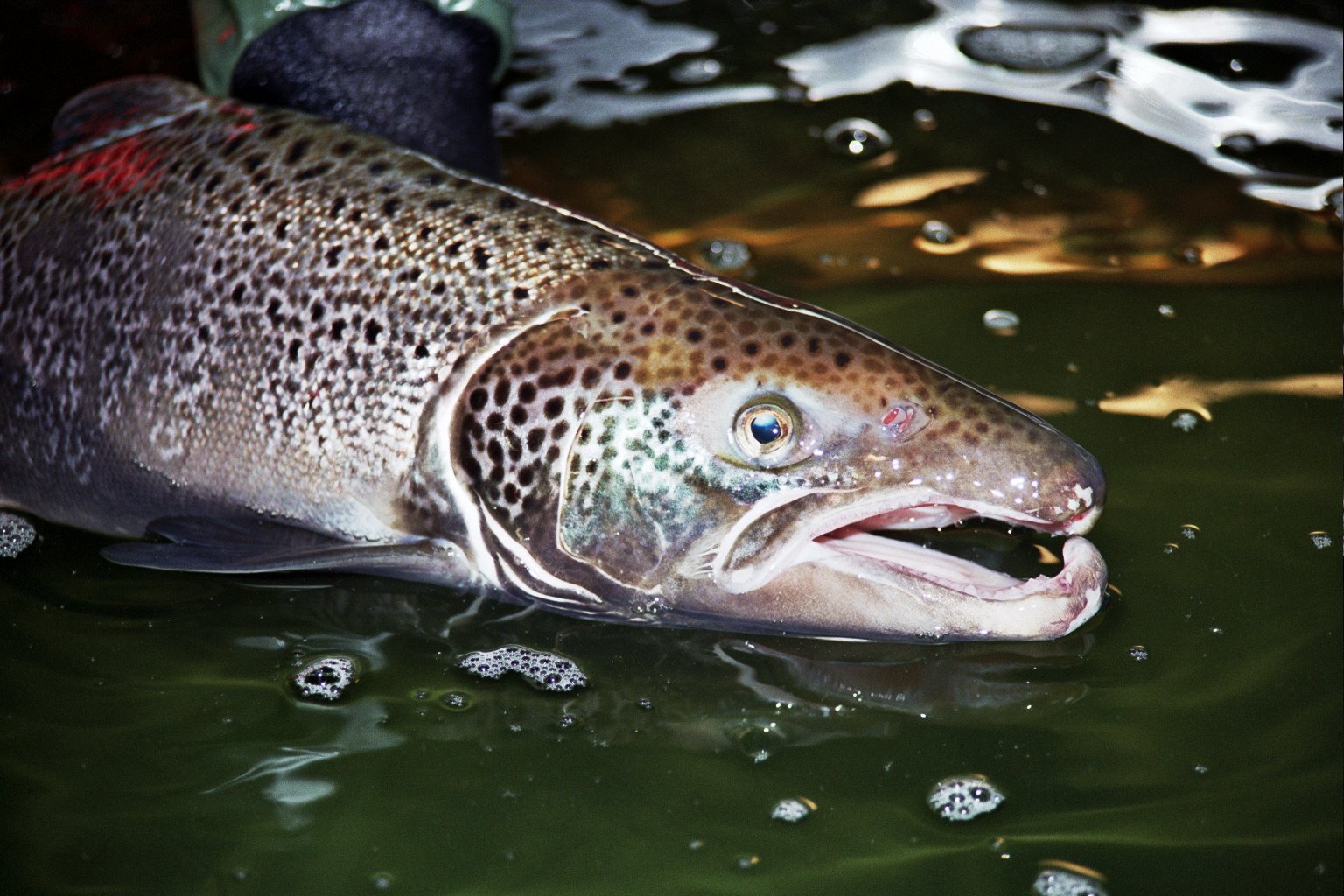
Salmon Farming Cycle (Seawater Phase)
The seawater phase of the salmon farming cycle is the grow-out stage, when smolts reared in freshwater hatcheries are transferred to marine cages and grown to harvest weight, typically 4 to 5 kg, over 14 to 24 months depending on temperature, genetics, and market target. Transfer is timed to the smolt window, when parr-smolt transformation has rebuilt the gills for saltwater osmoregulation; putting fish to sea early or late elevates mortality and growth variability. At sea the cycle is managed as a sequence of controlled stressors and interventions: grading to keep size variance low, vaccination completed in freshwater, continuous sea lice monitoring and delousing passes, thermal and oxygen management through summer peaks, and one or more winter checks on condition factor before the final spring growth push. Feed dominates cost at well over half of production expense, so FCR performance during this phase defines farm profitability, with good marine FCR around 1.0 to 1.2. The phase ends with harvesting, ideally after a short depuration or starvation period to empty the gut, and is followed by site fallowing before the next generation. Related concepts include smolt, feed conversion ratio, sea lice, site fallowing, and grading.