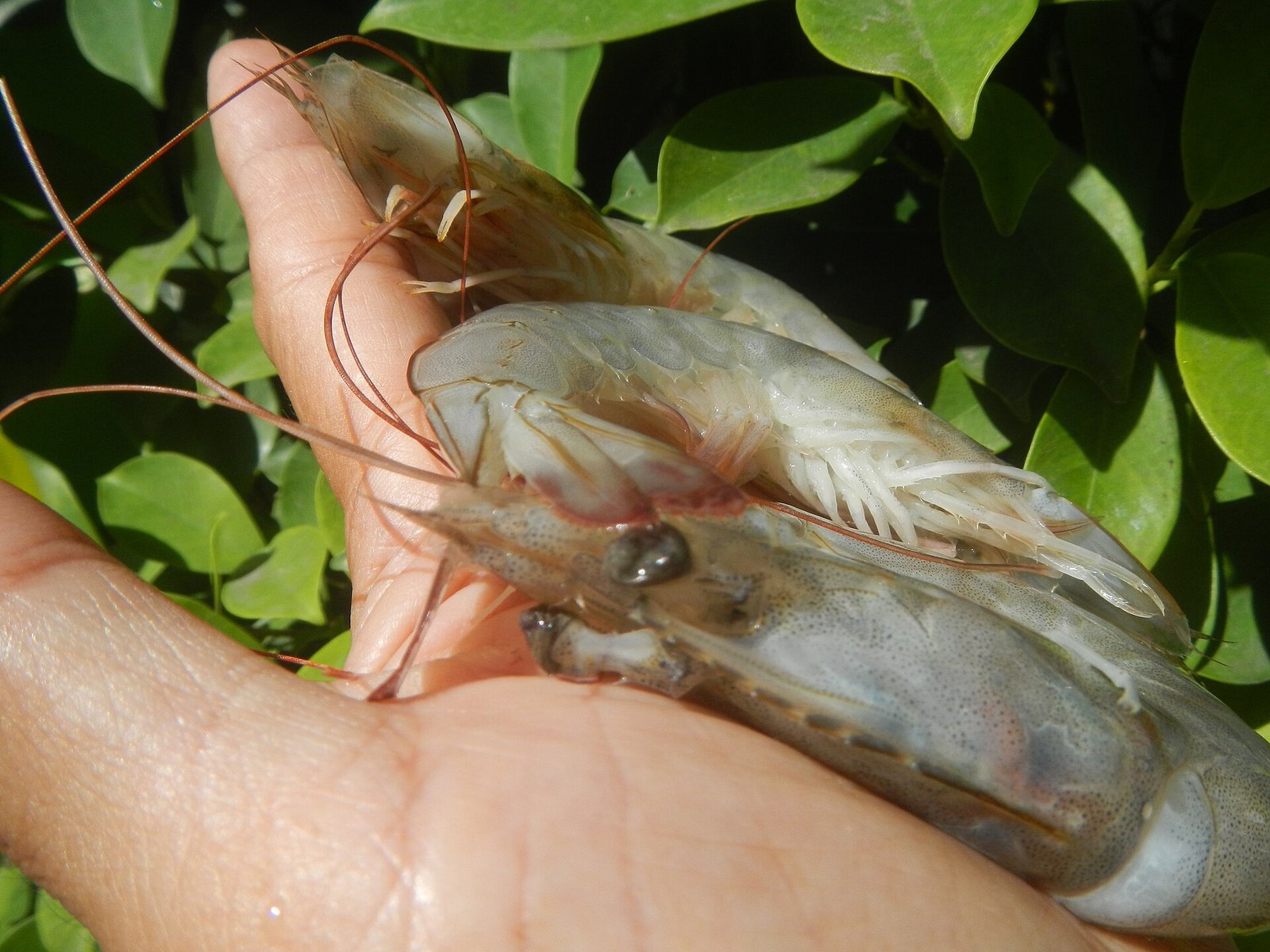
White Feces Syndrome (Shrimp)
White feces syndrome (WFS) is a mid-to-late crop condition of farmed shrimp in which floating, white to yellowish fecal strings accumulate at the pond surface and along windrows, accompanied by reduced feed intake, growth slowdown, and sometimes 20 to 50 percent cumulative mortality. The syndrome typically appears from 60 days of culture onward in high-biomass ponds. The white strands consist of lipid- and mineral-rich casts associated with a disturbed midgut microbiota, and contributors identified in research include gregarine parasites, filamentous bacteria (some Vibrio species), and benthic copepod and polychaete vectors that accumulate in the pond bottom. Consequences beyond mortality include poor feed conversion, uneven sizes at harvest, and increased susceptibility to secondary bacterial infection. Field diagnosis is largely observational, confirmed by gut-content and histology work in a lab. Management centers on pond bottom hygiene and microbial balance: aggressive sludge removal, water exchange, probiotics to suppress Vibrio, reducing overfeeding, and bio-secured inputs. Shrimp that continue feeding and molting can partially recover as biomass is reduced through selective harvest. Because WFS clusters in ponds with high organic load and accumulated benthic fauna, thorough pond preparation and mid-crop sediment management are the most reliable preventive levers.