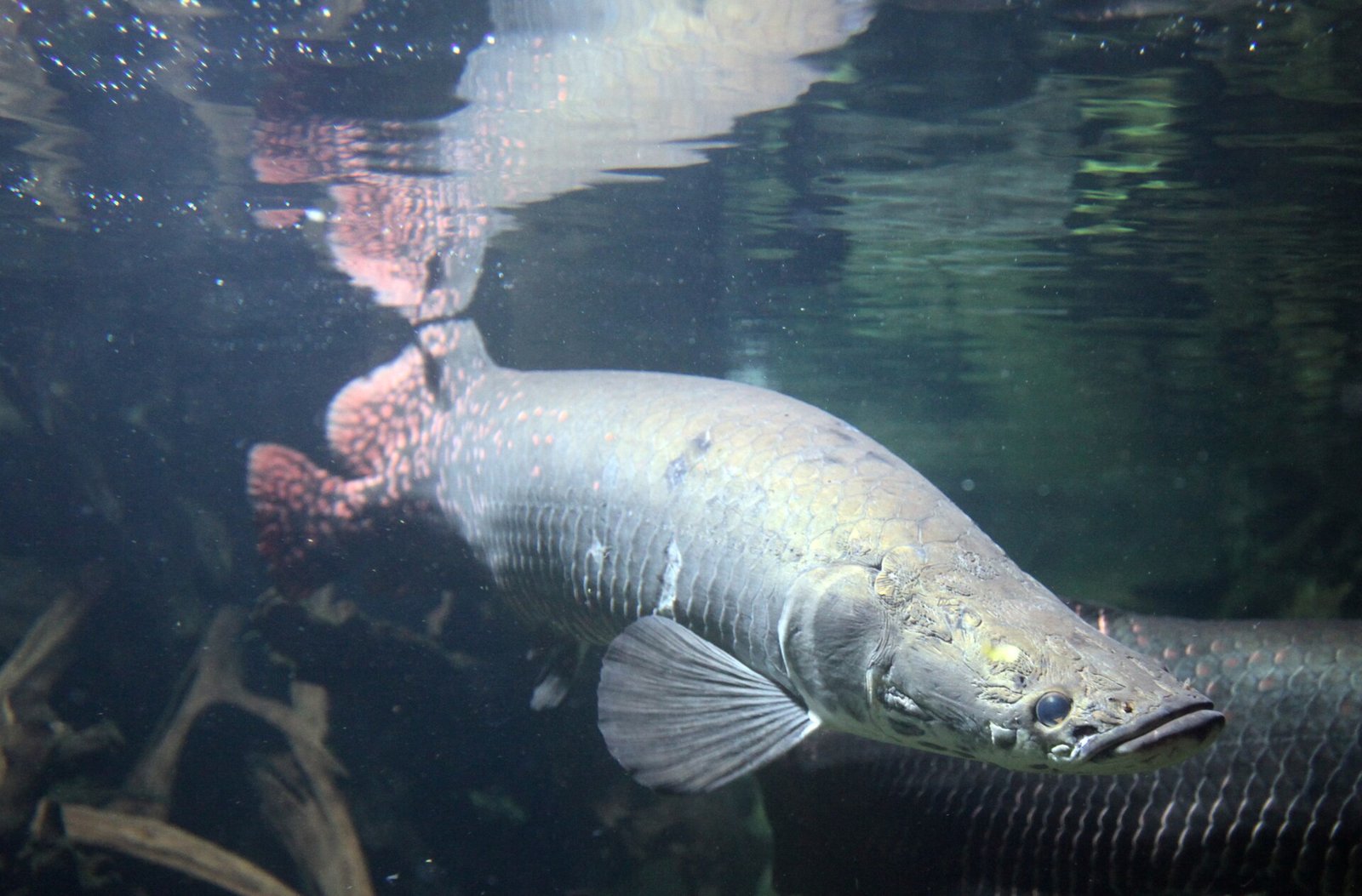
Arapaima Farming
Arapaima (Arapaima gigas and related species), among the largest freshwater fish in the world and native to the Amazon basin, has developed as a farmed species primarily in Brazil and other Amazon-region countries, valued for rapid growth to very large individual size, substantial boneless fillet yield per fish, and, like several other species discussed in this glossary, a facultative air-breathing capability, the fish must periodically surface to breathe atmospheric air regardless of dissolved oxygen conditions in the water, that supports strong tolerance of the low-oxygen, seasonally variable floodplain and pond conditions common across much of its native and farming range. The species' very large adult size, reaching several meters in length and well over 100 kg under good growth conditions, means grow-out ponds and handling equipment must be scaled accordingly, and harvest and processing logistics differ meaningfully from the great majority of farmed finfish species profiled in this glossary that reach market size at a fraction of arapaima's typical mature weight. Wild arapaima populations have faced significant historical fishing pressure and population decline in parts of their native range, which has made farmed production increasingly important both for meeting market demand sustainably and, in some conservation-linked programs, for supporting managed community-based wild fishery recovery efforts running in parallel with commercial farming development, a dual commercial-and-conservation dynamic sharing some conceptual similarity to the stock-enhancement model seen in white seabass farming though applied in a very different freshwater tropical context. Broodstock management and hatchery technology for arapaima remains an active area of ongoing development given the species' relatively recent transition from primarily wild-capture supply toward a more significant farmed production base, with reliable, consistent hatchery-based juvenile supply still maturing as a commercial capability across the region's growing arapaima aquaculture sector.