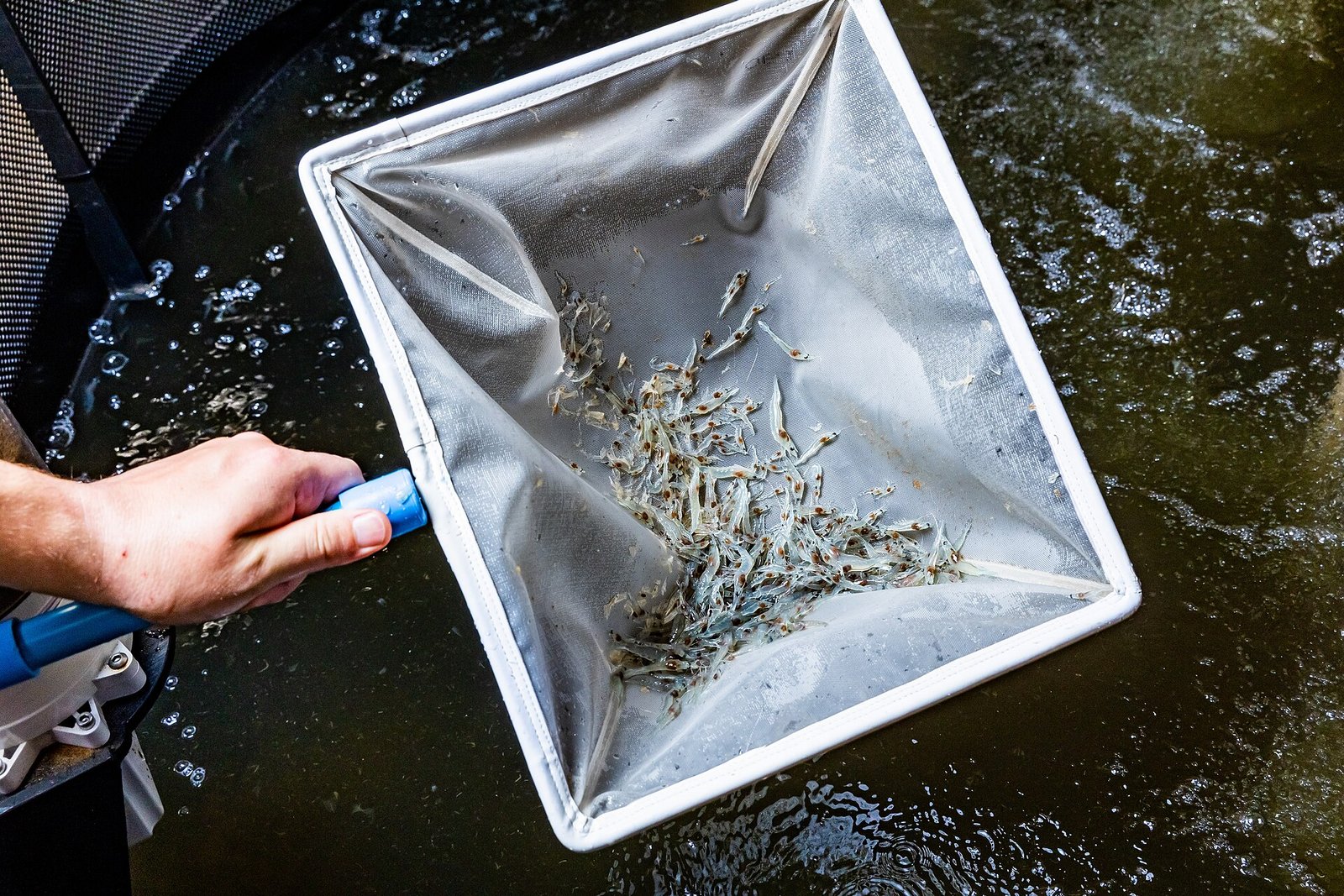
Molting Failure and Soft Shell
Shrimp grow only by shedding the exoskeleton in ecdysis; a failed or incomplete molt halts growth and is often fatal. Molting failure presents as shrimp stuck in the old cuticle, split but unshed exuviae, or animals with persistently soft, rubbery shells long after the expected hardening window of roughly 12 to 24 hours. Causes cluster around the three inputs the new cuticle needs: calcium and minerals from the water and diet, adequate energy and phospholipids to drive ecdysis, and environmental stability. Low or fluctuating alkalinity (below roughly 100 mg/L as CaCO3), soft or low-salinity water, and high nitrite all impair calcification; low dissolved oxygen, temperature swings, and handling stress suppress the hormonal molt trigger; and nutritional gaps in calcium, phosphorus, vitamin D analogs, or phospholipids produce soft shells even in good water. Soft-shelled shrimp are also far more vulnerable to cannibalism and bacterial infection until the cuticle hardens. Management means correcting alkalinity and mineral balance with lime or mineral supplements, stabilizing temperature and oxygen above 4 to 5 mg/L, and feeding broodstock- or grow-out-grade diets with adequate phospholipids and cholesterol. Where soft shells persist despite good water chemistry, mycotoxins or hepatopancreas disease should be investigated.