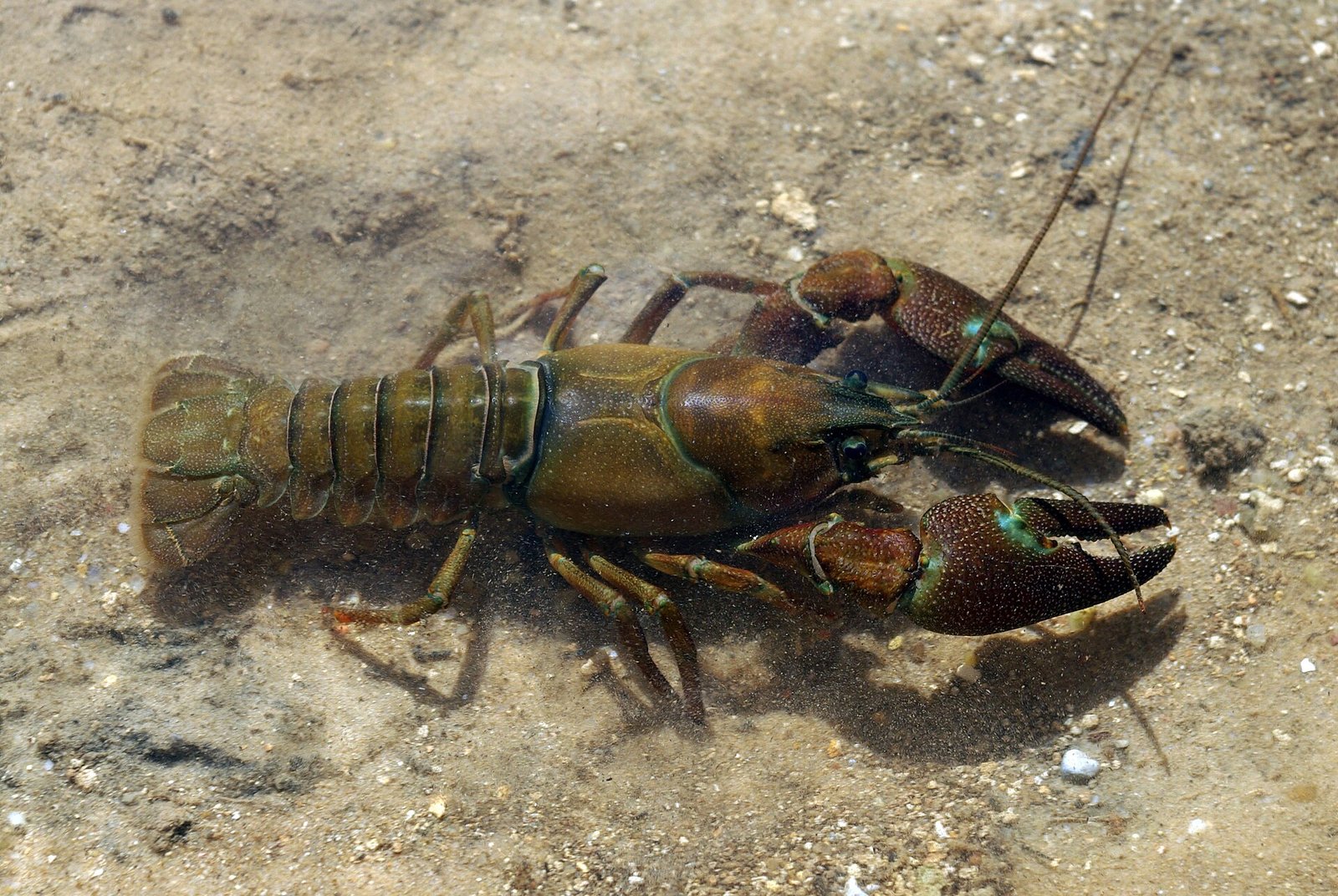
Signal Crayfish and European Crayfish Farming
Signal crayfish (Pacifastacus leniusculus), native to North America, has been widely introduced for aquaculture and fisheries purposes into European waters, where it has become both a commercially farmed species and, in a documented and significant ecological concern, a carrier of crayfish plague, a water mold pathogen the introduced species tolerates reasonably well but that has caused devastating population declines in native European crayfish species with little or no natural resistance, making signal crayfish farming in Europe a case study in the real tension between a species' commercial production value and its documented ecological risk to native biodiversity. European native crayfish species, including the noble crayfish (Astacus astacus), are also farmed in some regions specifically to support conservation-oriented restocking programs and a smaller premium domestic market valuing native species over the more widely available introduced signal crayfish, though native species farming generally proceeds at smaller scale and often under more stringent biosecurity and genetic management protocols specifically aimed at protecting remaining wild native populations from further plague exposure or genetic dilution. Crayfish plague management is consequently a central biosecurity consideration specific to European crayfish aquaculture in a way that has no direct equivalent in most other crustacean farming regions, requiring strict containment protocols preventing farmed signal crayfish, even where legally farmed, from having any water or equipment contact pathway to wild native crayfish populations or to waters supporting native species conservation efforts. Pond-based extensive and semi-intensive culture dominates commercial crayfish farming generally, with production economics and basic husbandry sharing considerable similarity to other freshwater crustacean pond culture, molting management, stocking density, water quality, though the specific plague-related biosecurity dimension distinguishes European crayfish farming's risk profile from most other regional crustacean aquaculture sectors.