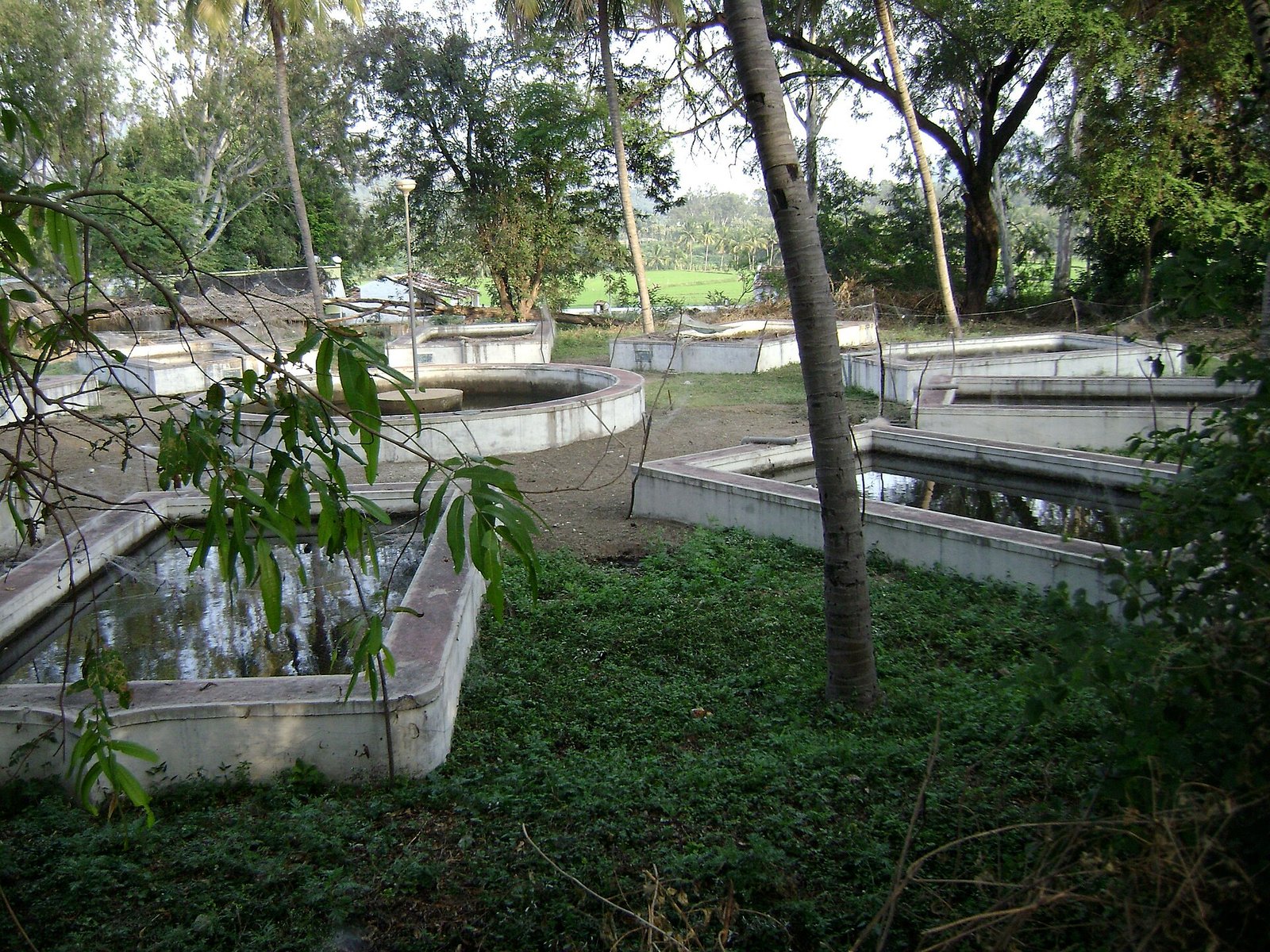
Green Water Technique (Larval Rearing)
The green water technique rears fish larvae in tanks deliberately tinted with live microalgae, typically Nannochloropsis, Isochrysis, or Tetraselmis at 100,000 to several million cells per mL, rather than in clear filtered water. The algae serve four functions: they provide background prey and stimulate production of rotifers continuously added to the system; they shade and calm larvae, reducing stress and wall-clinging; they absorb dissolved nitrogen and buffer water quality between water changes; and they compete with and suppress harmful bacteria, measurably lowering Vibrio pressure in the larval environment. The trade-off is opacity: the farmer cannot see the larvae, so mortality assessment relies on sampling, and algae consume oxygen at night, demanding careful aeration and oxygen monitoring. Green water is the default in most marine larviculture worldwide and is especially valuable for first feeding, where algal turbidity improves prey contrast and ingestion rates. It contrasts with clear water RAS hatchery systems, where mechanical filtration removes algae and bacteria are managed intensively instead. Some farms use a hybrid, running green water for the first 10-20 days then shifting to clear intensive conditions for the weaning phase.