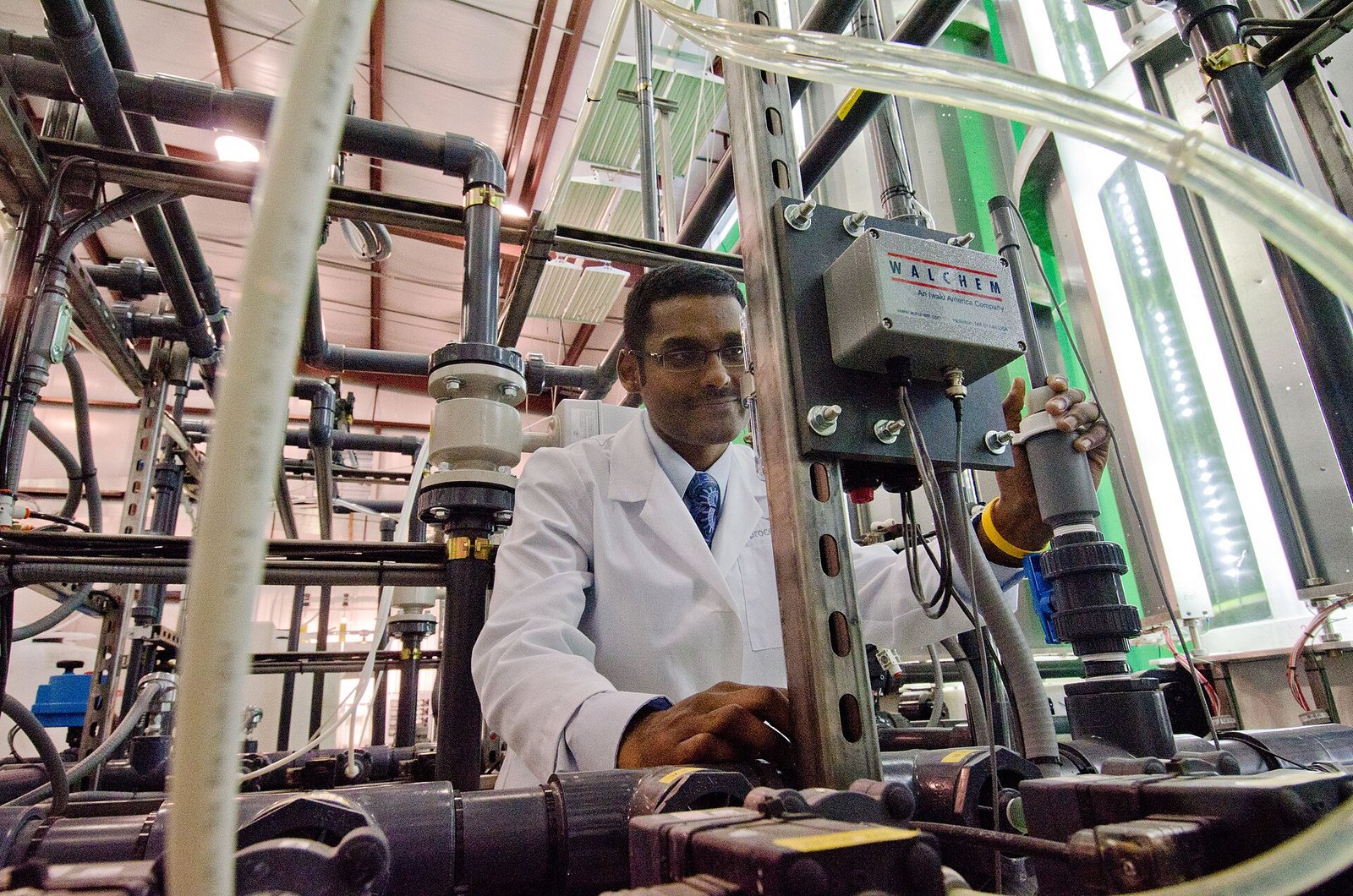
Vacuum Coating (Post-Extrusion Oil Application)
Vacuum coating applies liquid oil, and often heat-sensitive micro-ingredients such as certain vitamins or probiotics, to finished pellets inside a sealed vessel from which air has been evacuated, so the resulting pressure differential draws oil into the pellet's internal pore structure (created by the extrusion expansion process) far more deeply and evenly than simply spraying oil onto the pellet surface at atmospheric pressure would achieve. The technique exists specifically because high-fat marine and salmonid diets require more added oil than can be physically incorporated into the formulation before extrusion without destabilizing the process (fat above roughly 12-15 percent in the pre-extrusion mash tends to lubricate the extruder screw and disrupt proper cooking and expansion), so the extra oil is instead applied afterward under vacuum once the pellet's porous structure already exists to receive it. Vacuum coating also solves the heat-sensitivity problem for ingredients that would degrade under extrusion's cooking temperatures, since the coating step runs at a much lower temperature and happens after the pellet has already been cooked and formed, letting mills add a thermolabile vitamin or live probiotic culture without exposing it to the extruder's thermal stress. Coating uniformity, every pellet receiving a consistent oil and additive dose rather than some pellets over-coated and others under-coated, depends on vessel design and batch mixing action, and uneven coating is a documented cause of inconsistent nutrient delivery that chemical analysis of a bulk sample can mask by averaging out pellet-to-pellet variation.